
For most students, AI technology has become a tool to assist them in their studies. Adrian Gomez, a second-year master’s student at the University of Hawaiʻi at Manoa (UHM), uses tools like ChatGPT to help debug his code.
“Nowadays, there are so many AI systems that any one program is good,” Gomezs says. “It’s also really good for helping you study, since AI can generate flashcards and other useful study materials.”
Though research on AI and generative AI has been around since the 1950s, most of us only started to use it around 2022-2023. Tools like Grammarly, ChatGPT, Gemini, OpenAI, Duolingo, etc. have gained popularity in recent years because of their applicability to students and academic life, as Gomez demonstrates here.
Nowadays, more companies are incorporating aspects of generative AI to streamline their operations, improve production efficiency, and tailor their platforms to individual customers. As these new developments are implemented into our daily lives, schools find it difficult to balance their use.
UHM takes a decentralized approach to AI policies by empowering its faculty and instructors to determine how much use they prefer to have in their classes. This has led to a varied approach of some instructors embracing the full use of AI, while others are understandably restrictive.
UHM journalism Professor Brett Oppegaard developed an AI tool called journalismwatchdogs.org. Instructors such as Julien Gorbach in the Journalism Department have encouraged student use of this tool, which incorporates’ watchdogs’ with specific programs to improve students’ writing. The watchdog tool showcases the integration of generative AI tools through a collaborative effort by the UHM Department.
Journalist and Author Nathaniel Gronewold also contributes his thoughts, saying, “AI tools are mainly for research purposes, to streamline the research process, make it just a little more efficient.” He highlights that AI tools should not be used to shortcut writing your paper or homework for a class, since AI tools are sometimes not accurate anyway. “AI used to generate your paper is 100% plagiarism,” and something Gronewold does not stand behind under any circumstances.
Faculty and instructors have responded to concerns about plagiarism by looking for the most effective way to eliminate plagiarism in the classroom, which is to minimize the use of AI in general. Especially with grammar-checking tools, instructors fear it may undermine students’ writing skills; however, Gronewold believes it is important to incorporate these tools as most of us will continue to do so in the real world.
To become a strong writer, Gronewold likes to remind students of the importance of reading. Although he also emphasizes, “I’m very confident in my writing, but it’s always great to have another one or two eyes on your writing,” says Gronewold.
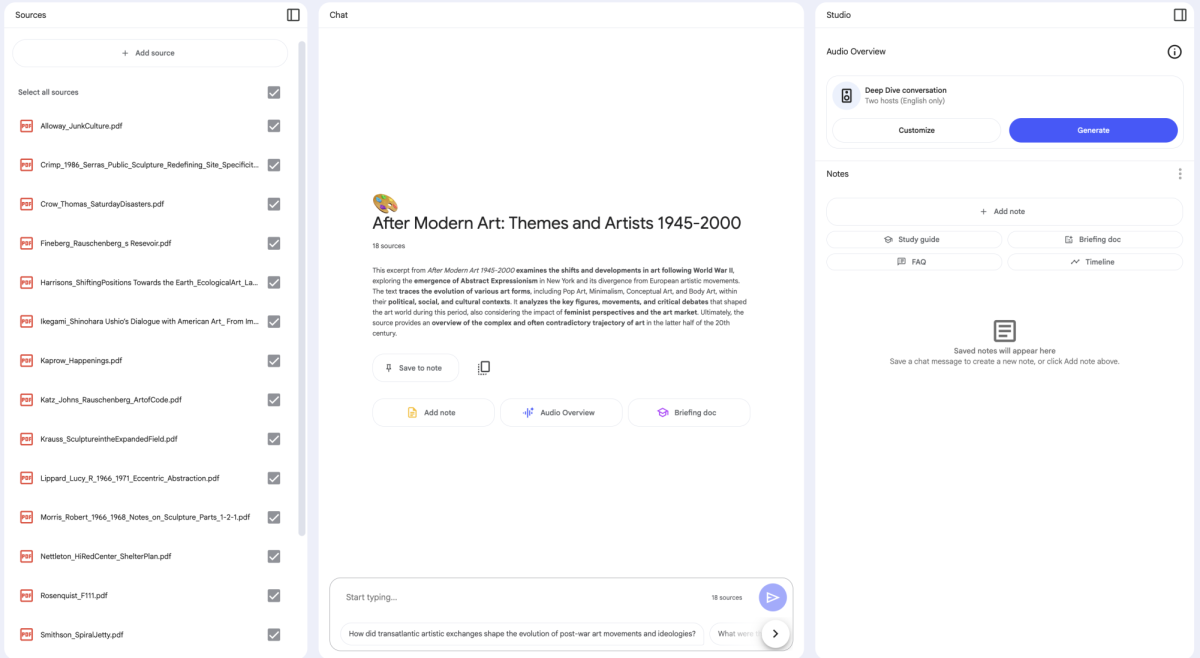
Even though instructors continue to adapt their assignments to resist the abuse of AI tools, UHM believes that faculty and students should “ experiment with AI tools while staying within legal and ethical parameters,” according to the Office of the Vice Provost for Academic Excellence. UHM has permitted staff to use Google Notebook LM, a generative AI tool that allows users to upload documents, videos, etc., and create comprehensive summaries. This step leaves things open-ended for instructors and students to evolve with the times.