

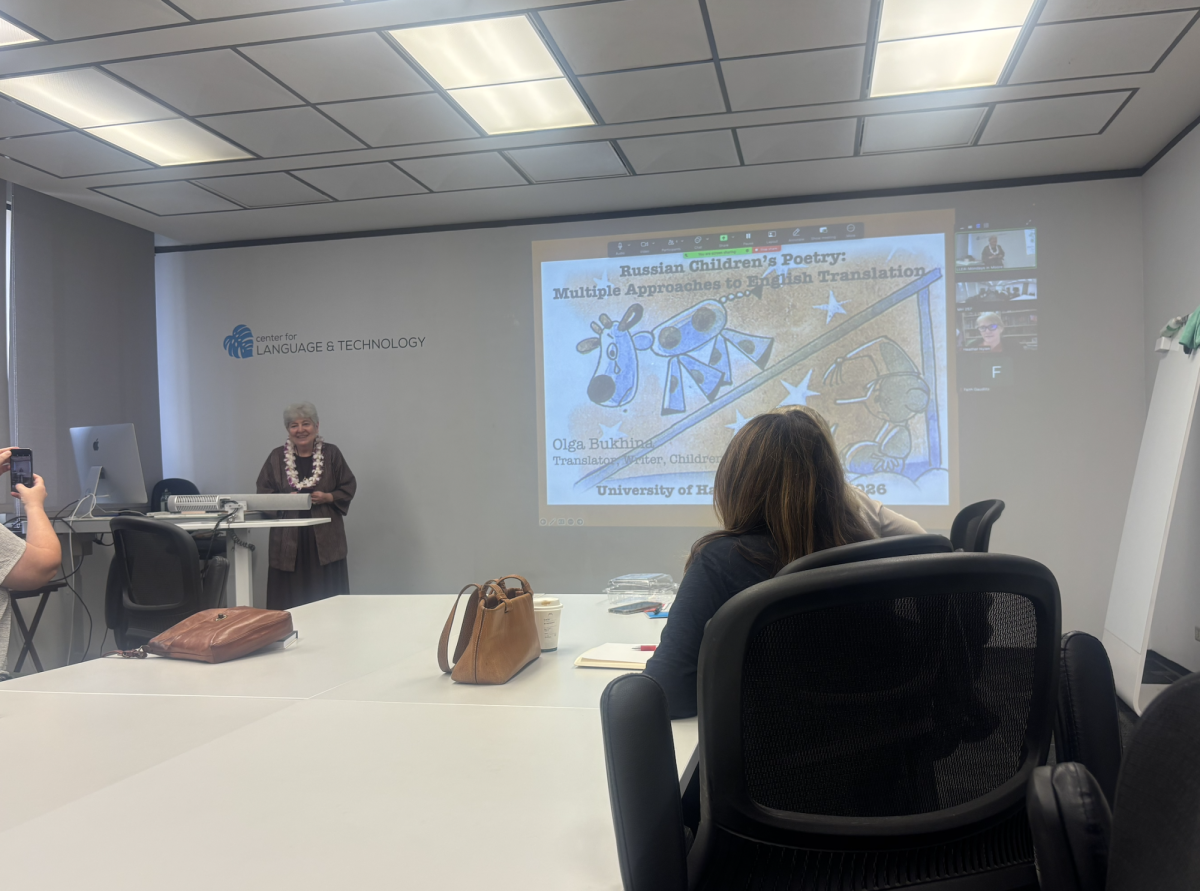
Translating Russian children’s literature to English translation is a difficult yet important task that Olga Bukhina specializes in. Her lecture on March 10 at UH Mānoa highlighted the process of translating, the complexity of interpretation, and strategies employed by contemporary translators.
The speaker used Russian children’s literature examples to explore different approaches translators take to translate languages into English. Children’s poetry, for example, is not simple nor definitive. Numerous translators engage in different strategies to create translated work that is literally comprehensible to English.
“People don’t know much about Russian children’s literature,” said Bukhina. “Whats going on in last 25 years in Russia, is completely unknown in America.”
As a translator, writer and children’s book specialist, Bukhina has translated over 50 books that range from graphic novels, picture books, scholar articles and more. Her specialization allows her to explain the significance of translation in children’s literature and why it is important.
“We want to create something that can be read by the public, not just scholars,” said Bukhina. “When a lot of people are working together, multiple voices of Russian literature translate to multiple voices of English literature.”
Translating poetry requires understanding and navigating poetic elements such as rhythm and rhyme. These essential elements are meant to be preserved while translating. Sometimes, multiple translators work together.
“Every language has different ways to express what the word is in English,” said Bukhina.
Poetry uses a variety of sounds that are interpreted differently among languages and cultures. Rarely does the translator combine multiple languages, though it does occur.
“Sometimes the meaning is changed to reflect politics,” claimed Bukhina. “Whatever happens in politics reflects in children’s literature.”
In an example she shared regarding English to Russian translation, the translator took out parts of the story to not mention religion. The story would not have been published if it included mentions of religion, like the original English version did.
The goal of translation is to reach the audience of a different language. In Russian to English translation, the target audience includes children, parents, caregivers and anyone interested in the art of Russian translation.
“How do you render the rhythmical prose? The rhythmical prose is different in every single language,” said Bukina when discussing challenges faced by translators.
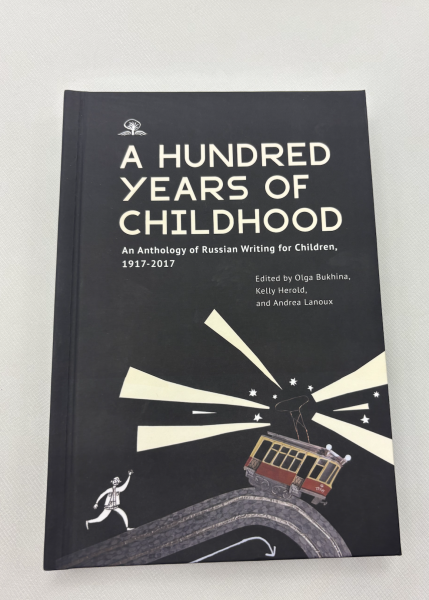
Translators have freedom in poetry, yet face many choices, compromises and creative solutions during the process.
“Translators make many choices about what they can do and what they should do,” said Bukhina.

















Jane • Apr 4, 2026 at 7:21 am
Fascinating!!!