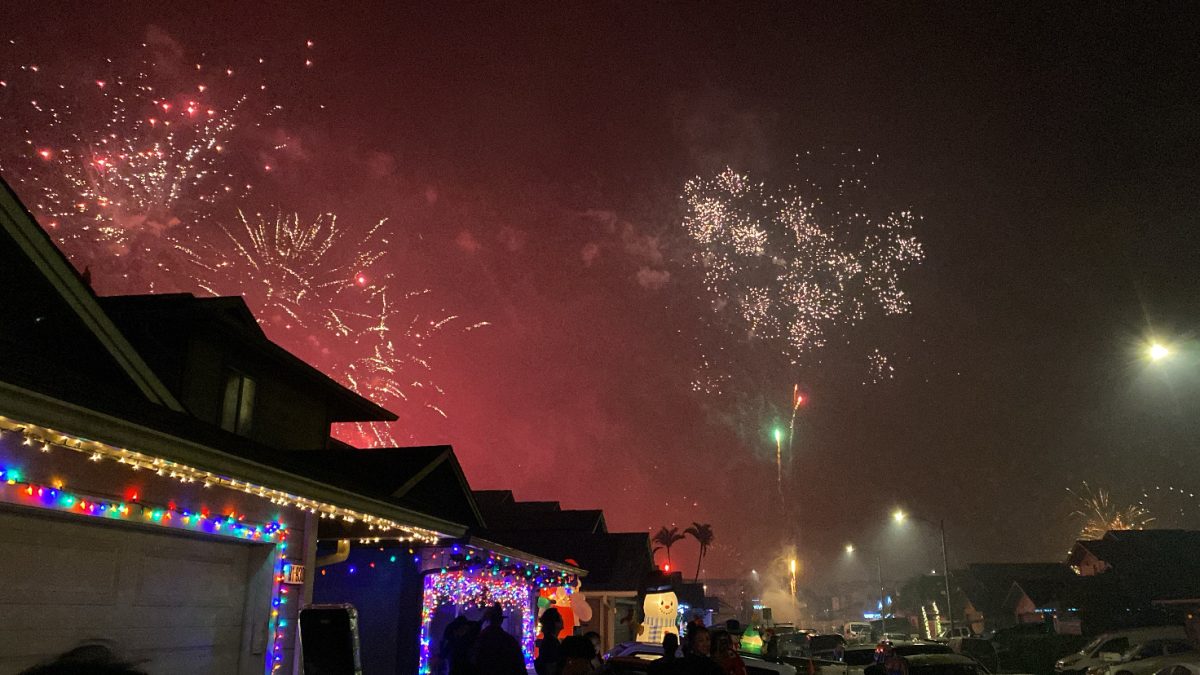
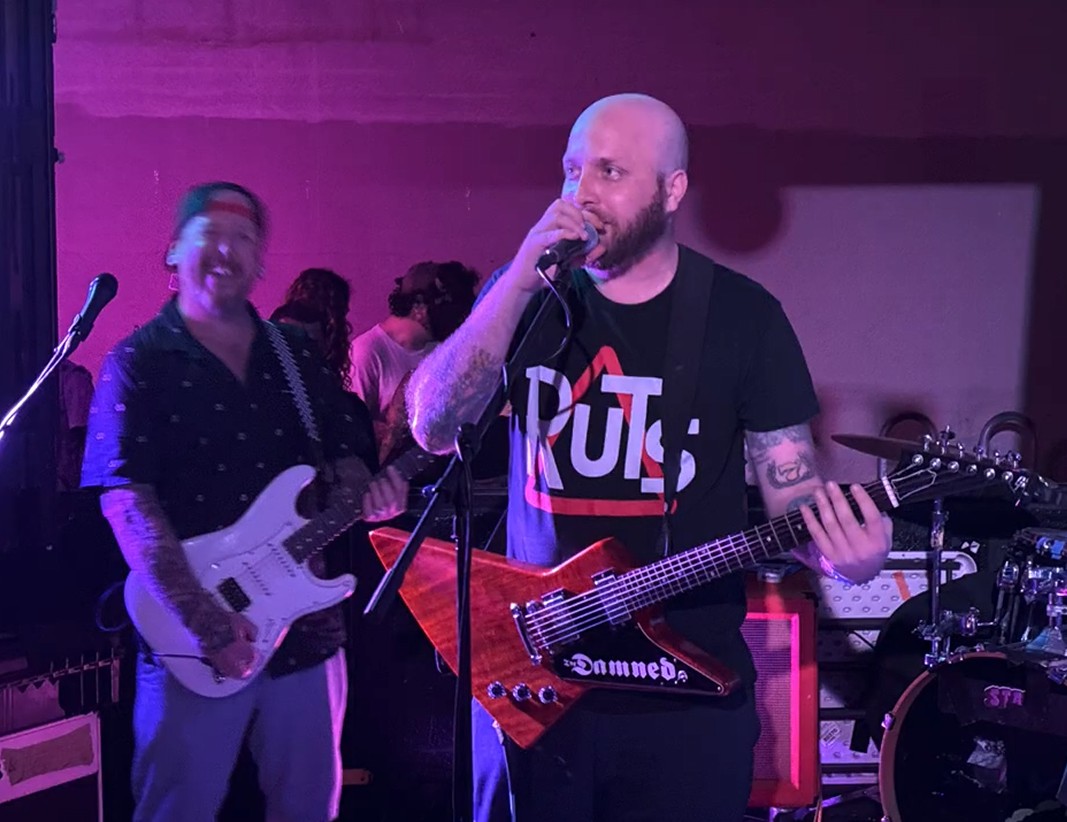
On a Friday night at Proof Social Club, the crowd gathers early. Instrument cases pile up near the stage, beer glasses rattle on the bar, and the room tightens as bodies press closer together. When the music starts, there’s no separation. Musicians and the audience share the same space, shouting lyrics back and forth under the low ceiling.
Hawai‘i-based punk music has been around for decades. Groups like Smitz and Hell Caminos took the stage in the early 2000s. Spanning from various genres including SKA, rock, punk and reggae, these groups are navigating the changing music scene on O‘ahu.
From physical media to streaming, local bands stand at the front of it all. As the music industry shifts to a new community post COVID-19, these bands are learning how to stay grounded with the fans who shaped them, remaining in the spotlight of Hawai‘i’s punk rock music scene.
A Different Era
Smitz, known for blending SKA rhythms with sharp punk energy, has been a player in Hawai‘i’s punk scene since the early 2000s.
Its name came before the band ever played a show. Sitting in after-school care with time to kill, a 12-year-old John “Johnny Random” Sanchez filled a page with nearly 50 possible band names, scribbling them down while his peers finished their homework.
When he brought the list to his friends, they voted, crossing out names until only one was left. Though Smitz hadn’t yet picked up an instrument, the name stuck.
“He was like, ‘We’ll learn,’” Sanchez said.
When Sanchez taught himself guitar and started writing songs, the name started to become serious.
The band officially formed in 2005 through a mix of school friendships and connections. When they started to practice that summer, Sanchez brought more than a dozen songs.
Their first show at Talk Kaimuki gave them a starting momentum.
Two decades later, Sanchez is the only original member, but the band’s identity hasn’t changed. Today’s lineup includes guitarist-vocalist Rob West, bassist Timmy Corker and drummer Nick Ramos. Their sound reflects influences like Operation Ivy and Bad Brains.
“We cater more to our interests than to the demographic,” Sanchez said. “Either you like us or you don’t.”
What has changed is how the band shares its music. Before the days of streaming, MySpace was their main platform, and CDs were still all the rage.
By their 2017 album release, the industry had changed. Sanchez still hands out CDs “like business cards,” though vinyl has made a comeback, and they plan to use it for their next album, “King of the Cul-de-Sac.”
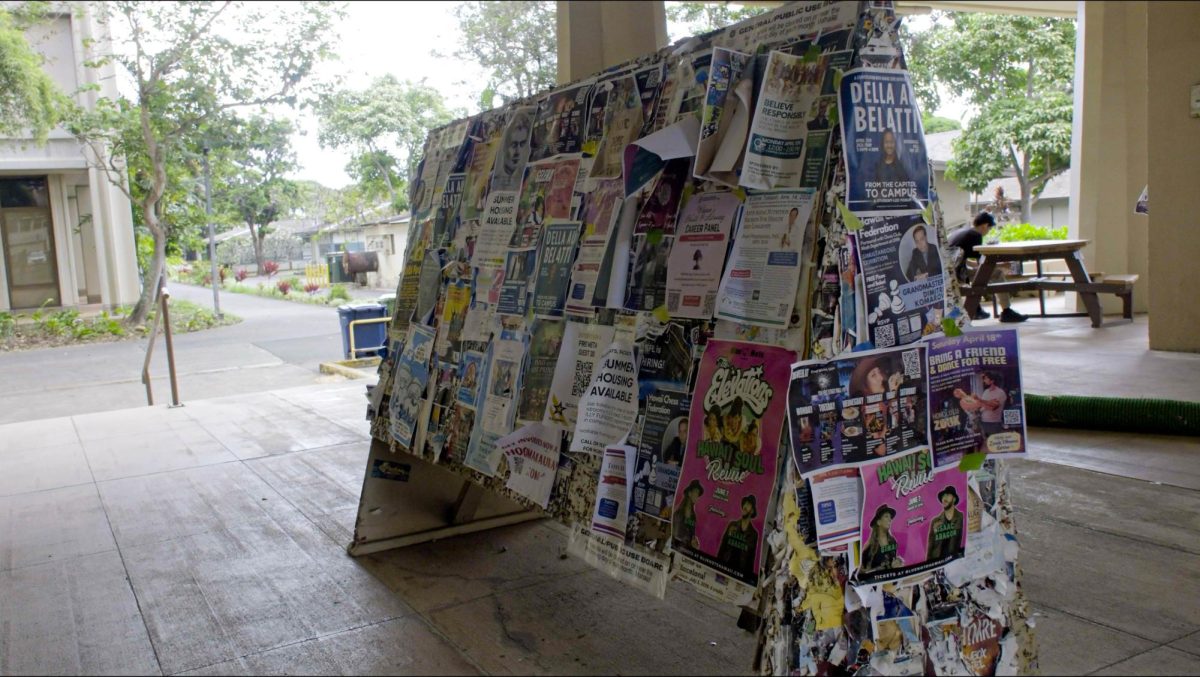
Social media has become essential for keeping their audience connected. For their 20th anniversary show in June, Sanchez combined old-school flyer stapling with targeted Instagram ads.
“The sky’s the limit if you’re creative,” said Sanchez, reflecting on the way social media has the potential to broaden their fanbase worldwide.
Another band, Hell Caminos, described a similar 20-year journey. Michael Camino, the band’s namesake, described the group’s unique qualities.
“Many bands have come and gone through the scene, and I don’t know why we are still around.” Camino said. “The only reason I can think of is that we all sing in the band.”
Camino has been playing the upright bass on and off since 2004. Other members of the band include Nick Danger, the guitarist, and Handsome Jack, the drummer.
Camino said the band is more emotionally invested because each member sings. Danger described his relationship with the fans as pretty exciting.
“I’ve said this for years,” he said. “I don’t care the size of the room. I just want to play to a full room.”
For Hell Caminos, a good show isn’t about the number of people who show up. Instead, a good show means an audience with a vibe. For them, the ideal vibe is a room packed with people drenched in sweat, rocking out and enjoying the music.
Satisfying a crowd looks different for every performer. Danger shared his routine of hitting the crowd hard in the beginning, closing strong, and playing songs the band wants to play in the middle.
“I think it kind of makes sense to play crowd favorites,” said Danger, “first two or three songs, last two songs, hit ‘em with crowd favorites.”
Hell Caminos’ latest tour was in 2006. Touring back then looked different than it does today – especially for a small band based in Hawai‘i.
Back then, Mike Camino booked the entire tour using MySpace. At each stop, Hell Caminos sold CDs and t-shirts to make ends meet. The money from merchandise went towards gas, food and coffee, plus AC – a luxury for a punk band.
“Now,” Danger said, “half the shows we show up to, we might not have anything for sale.”
While the band still promotes their performances through social media, they often cross their fingers for a positive turnout.
Having been around for 20 years, Hell Caminos has witnessed different generations in the music scene.
“Back in our day, when we were playing our second show, we sucked,” Danger recalled. “We were playing first. There was nobody there to watch us.”
He compared this experience to a new band’s second show.
“I show up, it’s their second show, and they sound like they’ve been playing for 10 years,” Danger said.
Danger is very happy to see this – happy that kids are gaining an interest in live music.
Taking the Stage…
The feel of the classic, old-school punk scene continues to inspire a new generation of bands who lead the scene with a commanding charge.
Kainalu Kolivas was introduced to the Honolulu punk scene in 2014 with a band he had with his friends in high school.
In 2017, Kainalu really started delving into the scene when he began working at Downbeat Diner and Lounge, a mainstay hub for live music throughout the 2010s.
During his time at Downbeat, Kolivas was involved in live music, throwing shows and events Tuesday through Saturday night each week for the better part of a year.
His Downbeat experience opened the door to get even more involved in the growing scene.
He got to experience the energy that the “old guard” bands like Black Square, Smitz, and The Hell Caminos brought to each show. The passion these artists emanated for the scene rubbed off on him.
Inspired by the lively shows of bands from the previous generation, Kolivas and a few of his friends decided to start playing music together in late 2019. This was the inception of his current band, Dreams of Future Machines.
“Let’s play music,” Kolivas said. “Like, why not? We vibe well together, let’s play music.”
The band played a few live shows here and there, but things really started picking up for Dreams during the pandemic.
The band went on to record their first album, “Give You Everything,” at New Town Recorders in New York. After New York and Kolivas’ recovery from a gnarly motorcycle accident, Dreams was asked to headline at The Republik.
The Republik, known for being one of the biggest venues for live music in Honolulu, had never before had a rock band headline one of the shows. So this was big – not only for Kolivas and Dreams, but for the scene as a whole.
“I was like holy sh-t!” Kolivas said, remembering the crowded show. “You guys are here for us? That is insane.”
Despite the demand for new bands in the Honolulu area, the repetition of playing at the same venues each week inspired Kolivas to start something fresh.
“I think it’s fun to try and search out new zones,” he explained. “I was shopping at Harbors [Vintage] one day and had to go to the bathroom … I walked into this room and was like, ‘what is this? It’s just a big room. I went up to the cashier and I asked her what’s going on with the back room, you guys ever think about playing live music?”
Eventually Kolivas got in touch with the owner, who told him his band could try out a live performance there.
The first show at Harbors was for their single release, “In a Wash.”
“The whole reason I wanted to find a new spot was because there were no all-age spots,” Kolivas said, emphasizing the need for kids to have a place in the scene.
Dreams of Future Machines and Kolivas went on to throw shows there for six months, giving the younger generation of punk rockers a place of their own.
“Its become a whole new hub,” he said. “I feel like it awakened a whole new side of the scene. People that otherwise would not be able to come out are now regularly hanging out, meeting people, getting inspired to start their own bands. I told [the owner] this is exactly what I was hoping would happen with this space.”
Along with opening for Smitz at the Proof Anniversary event, Dreams of Future Machines threw seven all-age live shows at Harbors, which they call “Third Space,” and which has continued to fan the flames that keep the Honolulu punk community alive.
“Look at the past generation,” Kolivas said. “Look at the guys that are the guys from the past generation. What can you learn from them? How can you grow from watching them?”
The symbiotic relationship between the older bands and the new generation, the older venues like Proof and the newer venues like Third Space at Harbors Vintage, sets the Honolulu music scene apart.
Older generations continue to learn and try to keep up, and the young generation tries to grow with inspiration from their predecessors. Hawai‘i’s punk scene is a cycle of passing the mic.
That shared responsibility is what holds the scene together. These bands aren’t competing to stay relevant; they’re actively lifting each other up. The past 20 years have shown that on an island with limited venues and limited reach, collaboration matters more than competition.
As new bands form and old bands evolve, the scene keeps growing. Not because of industry backing or viral moments, but because musicians keep choosing to show up for one another.
And in Honolulu, that’s how punk survives.