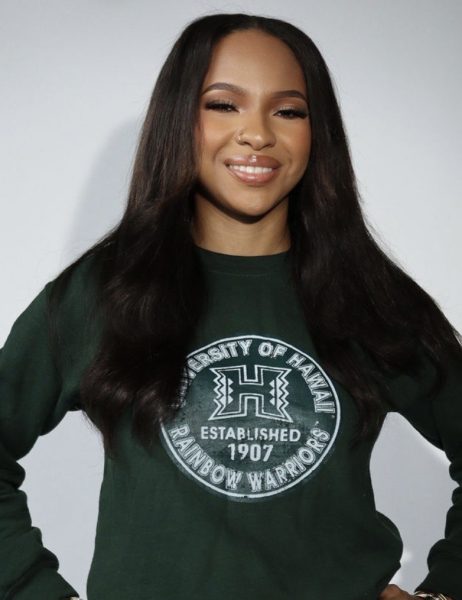


Being a Black student in Hawai‘i can feel like being a single dark shell on a beach of many colors—noticed, sometimes admired, sometimes misunderstood, and always aware that you come from an ocean different from the one that shaped everyone else on the shore.
According to the University of Hawai‘i at Mānoa enrollment data, Black students make up just 1.9% of the student body, a campus shaped largely by Polynesian, Asian, and local Hawaiian influences. In a place often celebrated as a “melting pot,” their experiences complicate the idea of Hawai‘i as a post-racial paradise.
For many Black students, finding community at UH begins with the same quiet question: Who here understands me?
Kyla Mitchell, who transferred from the Bay Area, expected a slower pace and a new environment. What she didn’t anticipate was the sharp drop in familiar faces.
“Back home, Black people are everywhere like 80% of the population,” she said. “Coming here, you really feel the shift. I didn’t realize how much I relied on that until it wasn’t there.”
She also noticed a division within the already small Black student population.
“A lot of Black students here are athletes, and they already have their team friends,” Mitchell said. “It’s not that they’re unwelcoming, but they already have their circles.”
For some students, that feeling is not entirely new. Heidi Ricketts, a 22-year-old transfer student from Southern California, says she grew up accustomed to being one of the few Black students in her classes.
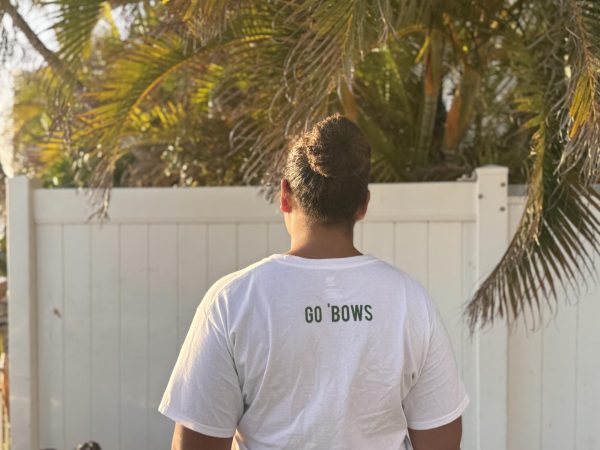
“So when I came here, it didn’t feel that different,” she said. “I actually feel pretty comfortable.”
Still, even Ricketts acknowledges moments of isolation.
“Sometimes you’re reminded that you’re the ‘only one,’ or the ‘different one,’ even if people don’t mean anything by it,” said Ricketts.
That reminder often shows up most strongly in classrooms. Being “the only one” becomes not just social, but academic.
“I walk into class, and I’m the only Black student,” Mitchell says. “It’s not new, but it hits different here. Sometimes you feel invisible; other times, too visible.”
For Ariel Hall, a member of the Black Student Association (BSA), that feeling carries an emotional weight.
“Yes, I do feel isolated at times,” Hall said. “There’s this feeling of being exposed or slightly out of place, like everyone else already has an unspoken sense of belonging. Even though I logically know that isn’t true, that’s still how it feels emotionally.”
As a Black transfer student, Hall says that a sense of isolation can feel amplified. BSA, however, has become a grounding space.
“Being in BSA has helped because it reminds me that I’m not alone in feeling this way,” she said. “It gives me space to process those emotions with people who understand.”
Representation—or the lack of it—also plays a significant role in shaping Black students’ experiences. UH Mānoa has few Black professors and limited course offerings centered on Black history or Black Pacific identity. According to Niche, Black professors only make up 1% of the full-time faculty. For many students, that absence reinforces the feeling of being an outsider.
“A thousand percent, having more Black professors would help,” Hall said. “I haven’t had a Black professor yet, and I genuinely look forward to the day I do.”
She explains that representation changes the classroom dynamic in subtle but meaningful ways.
“When I’m not the only Black person in the room, I feel more relaxed, more seen, and more willing to speak up,” she said. “It’s not a knock against my other professors. I’ve had some amazing instructors, but something is affirming about being taught by someone who understands aspects of your lived experience.”
That longing for representation leads some Black students to wonder whether they would feel more at home at a Historically Black College or University (HBCU). Hall’s answer is thoughtful and nuanced.
“Honestly, I’m not completely sure,” she said. “In some ways, I think I would feel more at home; there’s comfort in being surrounded by people who look like you. But no space is perfect. Every institution has its own learning curve, and comfort depends just as much on community as it does on location.”
Compared to the mainland’s predominantly white institutions, some students describe UH as more relaxed and less overtly racialized. Yet when compared to HBCUs or campuses with larger Black populations, UH can feel quiet, almost culturally silent.
Hawai‘i’s strong military presence adds another layer. While it increases the number of Black families on O‘ahu, it doesn’t necessarily translate into long-term Black campus life. Military-affiliated students often come and go, forming temporary communities rather than deeply rooted ones.
Still, within that transience, Black students are creating something lasting.
Small gatherings, shared looks of recognition across campus. These group chats start with “Hey, I saw you at the library,” and organizations like BSA are slowly stitching together a sense of belonging.
“Navigating being Black at UH feels like navigating being Black in most of the world,” Hall said. “It takes awareness, resilience, and sometimes grace. I lean heavily on community spaces like BSA to ground myself and remember who I am.”
For Hall, showing up matters not just for herself, but for those who come after her.
“If my presence or honesty helps someone else feel less alone,” she said, “then that matters.”
Sometimes the goal doesn’t have to be systemic change, but simply making a difference in someone’s day.
In a place where Black students make up less than 2% of the population, those moments, small as they may seem, carry weight. They created a connection. They create a home.
That’s because belonging doesn’t always arrive fully formed. Sometimes it’s built piece by piece, through friendship, through shared experience, through simply knowing you are not the only shell on the shore.