

As Emily Kulaga drove out of the Planned Parenthood parking lot after a volunteer shift, a pro-life demonstrator drew her attention off the road, holding flyers up to her drivers-side window while his truck blocked her view of oncoming traffic.
It wasn’t Kulaga’s first time experiencing this type of distraction–she ignored the demonstrator and drove away. Still, frustration and anxiety lingered on her drive home.
Pro-life activists are frequently found holding signs or verbally harassing volunteers, clients, and healthcare workers as they enter or exit the facility on Beretania St.
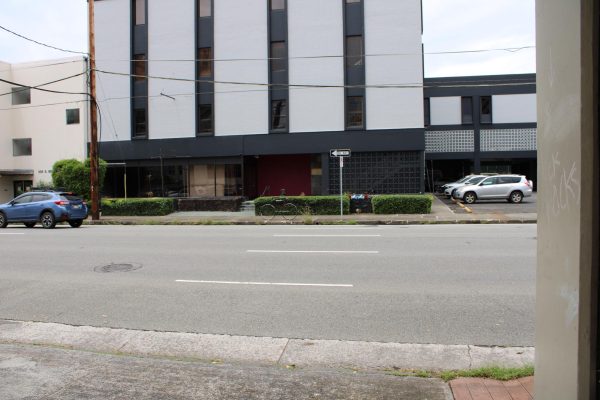
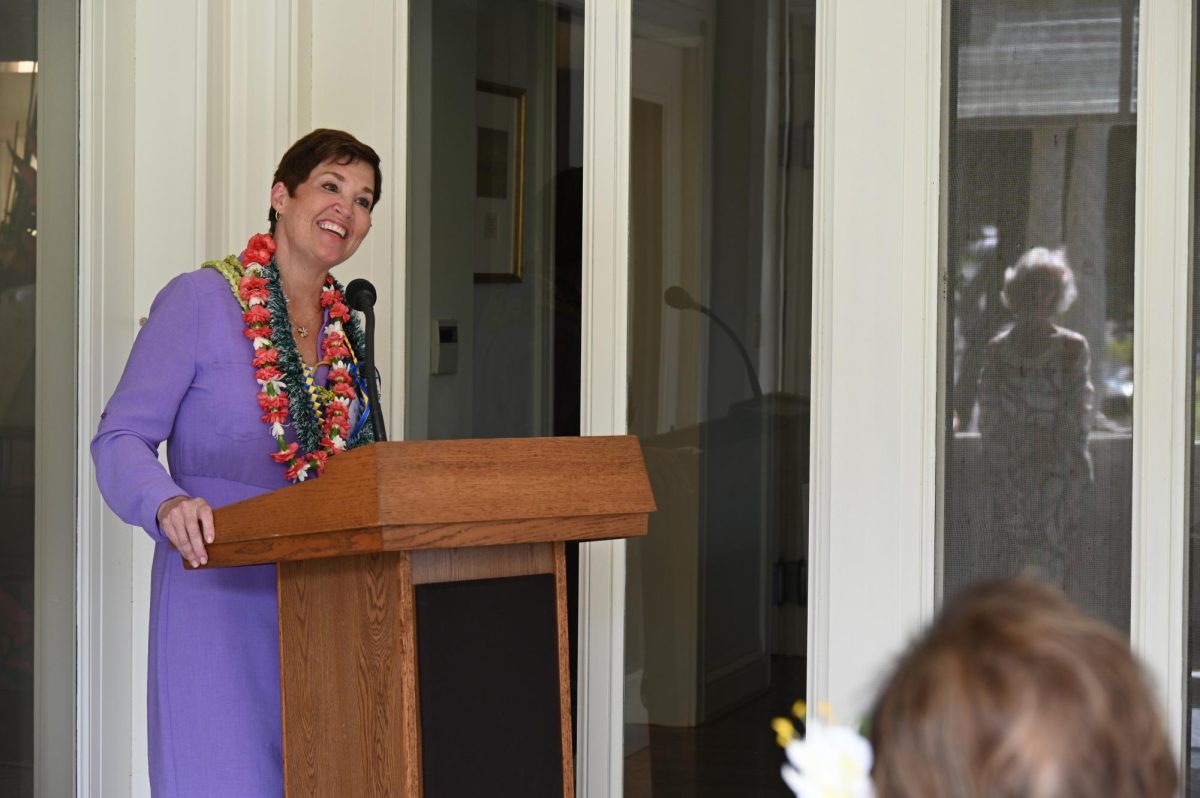
“Seeing people that are being aggressive in that way is really scary,” said Kulaga, a UH Mānoa senior and president of the student group Generation Action. She said that the blind exit from the parking lot is dangerous and that it feels even more so when protestors block her vehicle or her view.
Cars spill into intersections when the lights turn red at rush hour in Urban Honolulu. The one-way street becomes backed up bumper to bumper almost every day, making the exit from the Planned Parenthood lot difficult under the best of circumstances.
The pro-life campaign 40 Days for Life features a nationwide interactive map of Planned Parenthood locations and other facilities that promote reproductive health where volunteers can sign up for a “life 365 vigil,” according to the website. These volunteers and others can often be found demonstrating outside 839 S Beretania St.
Hawaiʻi House Bill 1961, which aims to prohibit reckless interference of access to health care facilities, limits demonstrations outside of health care facilities, including Planned Parenthood. HB 1961 was enrolled on Thursday to be passed into law.
Community Voices
Hawaii Family Forum, a group affiliated with the national Family Policy Alliance and in partnership with the Hawaii Catholic Conference, is one of the main voices opposing HB 1961.
The group expressed concern for broad interpretations of the word “reckless,” which “could unintentionally impact peaceful individuals engaging in lawful public expression,” according to a written testimony submitted on April 6.
Eva Andrade, the group’s president, wrote that individuals of faith may be called to pray for and offer support and information to “individuals facing difficult life decisions.”
Kulaga was also concerned for those facing difficult decisions, saying that verbal harassment and physical interference from protestors can cause distress.
“It would be so much more distressing if someone was there for an abortion, especially if that abortion was a hard choice,” Kulaga added, emphasizing other “distressing” medical issues that Planned Parenthood offers resources for, such as miscarriage.
Hawaii Family Forum’s testimony condemned violence, threats, and obstruction of healthcare facilities, but said that these actions are already prohibited under existing Hawaiʻi law.
Planned Parenthood’s supporting testimony asserted that existing law is not enough. The group’s written testimony cited increasing instances of vandalism, assault and battery, threats of harm or death, and harassment as necessitating further protections.
A concurring written testimony from the Hawai‘i State Center for Nursing cited a 2025 survey finding that 64% or over three in five nurses in Hawai‘i have been verbally or physically abused by a patient or visitor in the past year.
Expanding on Existing Law
The Freedom of Access to Clinic Entrances (FACE) Act is the law that “prohibits the use or threat of force and physical obstruction that injures, intimidates, or interferes with a person seeking to obtain or provide reproductive health services,” according to the Department of Justice website.
Differences between HB 1961 and existing laws lie in technical details.
The FACE Act defines physical obstruction as “rendering impassable ingress to or egress from a facility that provides reproductive health services,” according to Cornell Law.
The text of HB 1961 leaves out the word “impassable,” instead prohibiting “intentional,” “knowing,” or “reckless” interference with a person’s access to or from a healthcare facility.
While intimidation and interference are prohibited under the FACE Act, changing the wording opens the door to persecution under HB 1961 for actions that would not be prohibited under the FACE Act alone.
Jordan Kapono Nakamura, a candidate for Hawaiʻi State Senate District 13, highlighted other key differences in wording. Existing laws prohibit “obstruction” of healthcare access, while HB 1961 prohibits “interference.”
“Interference can be emotional interference,” said Nakamura, “whereas obstruction is pretty physical.” Nakamura said that this distinction could give individuals the ability to seek legal counsel for instances that may not otherwise be applicable.
While emphasizing his support for demonstrators’ rights to free speech, Nakamura added that the right to access healthcare is just as important as the right to protest.
For Kulaga, it felt good to see HB 1961 supported by Hawai‘i’s political leaders.
“I know that this bill will make getting medical care, volunteering at Planned Parenthood, and working at Planned Parenthood, for the providers, feel so much safer,” said Kulaga. “I think it will have a really big impact on the community.”
The demonstrator mentioned in this story is not known to be a part of any mentioned groups or campaigns.