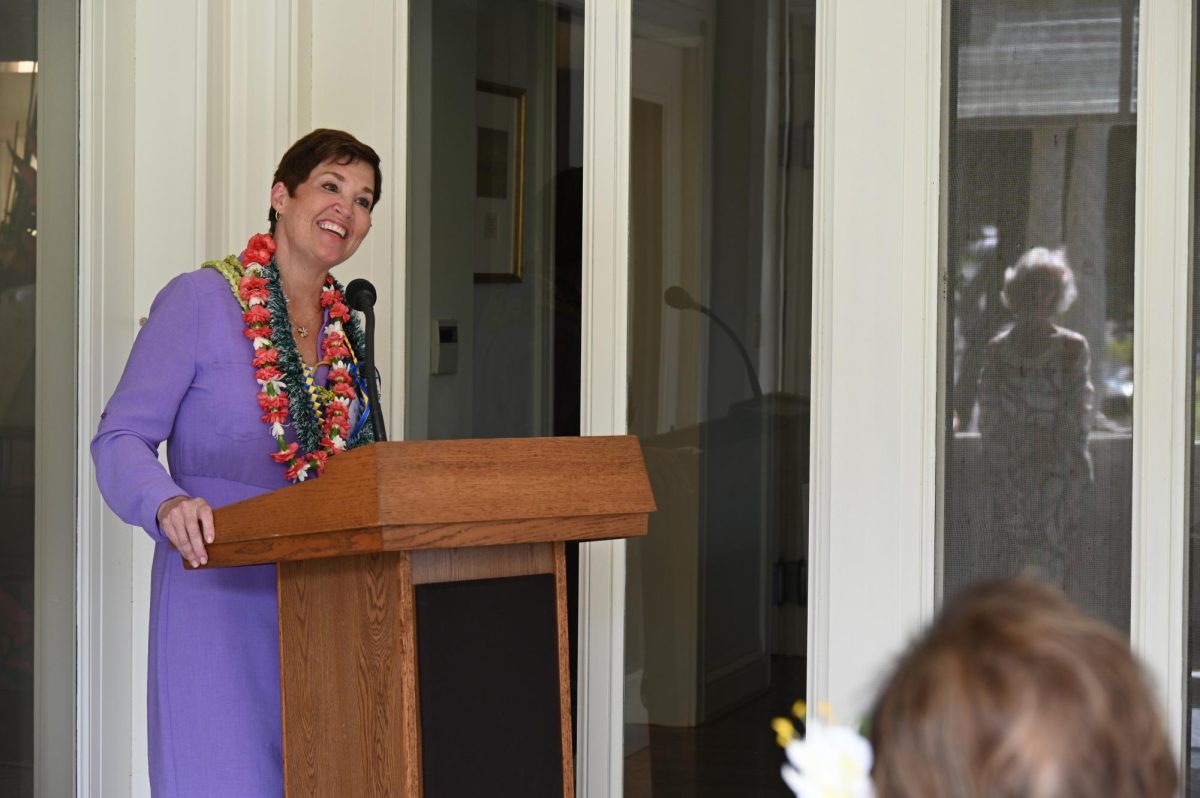
A 76-year-old woman in Mānoa is teaching Hawai‘i residents how to reduce food waste using worms and materials from a nearby elementary school.
Mindy Jaffe, the operations manager of Worm Ohana, offers monthly workshops to teach students about vermicomposting at the Ohana’s headquarters at the Magoon Wormery in Mānoa and the Urban Garden Center in Pearl City.
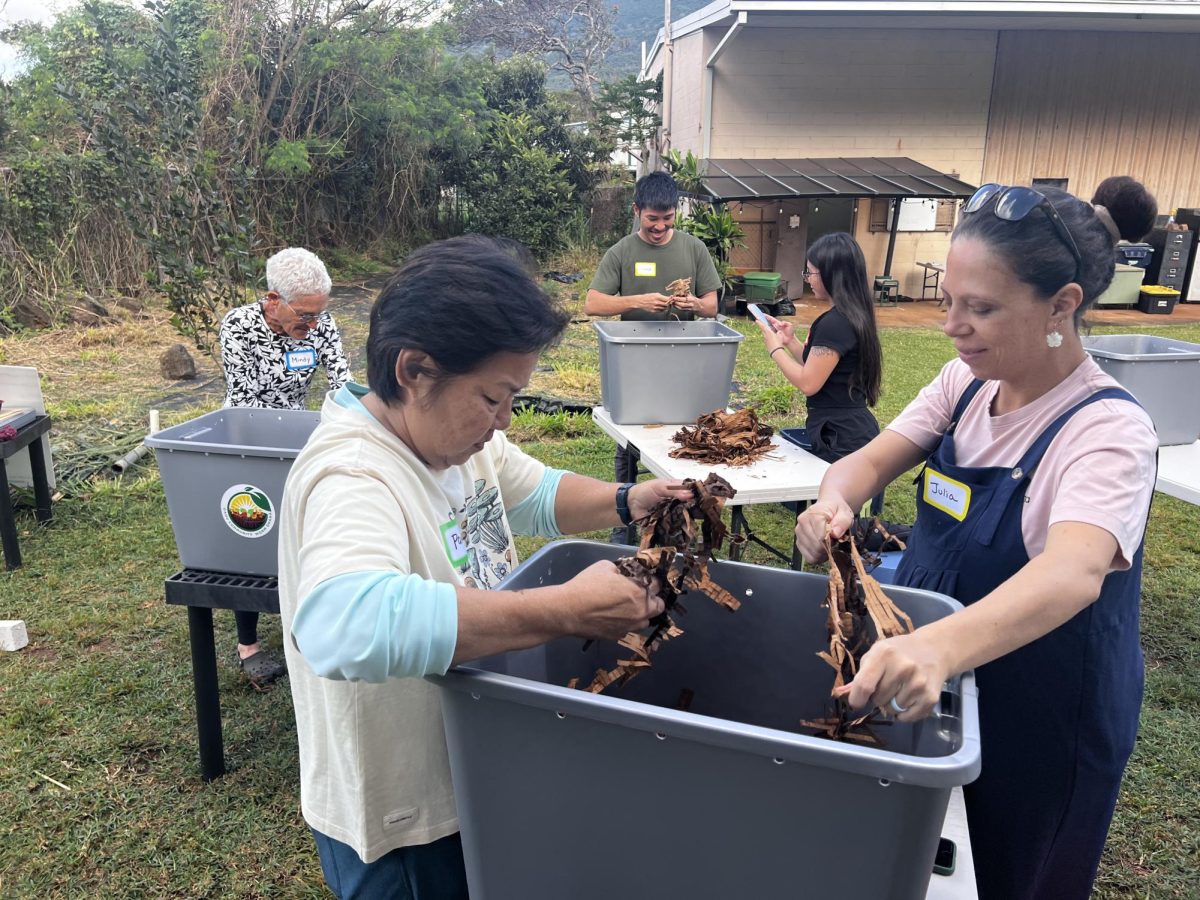
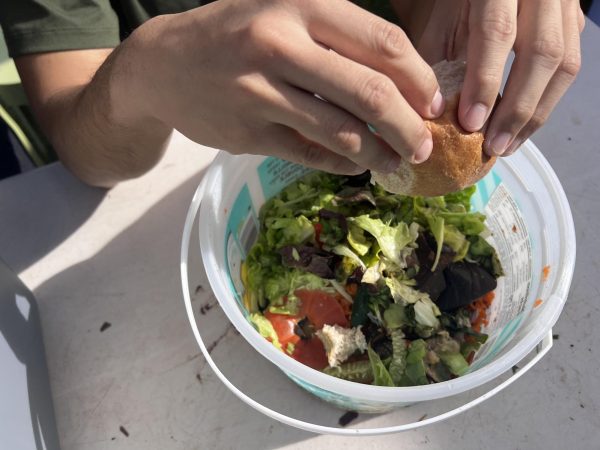
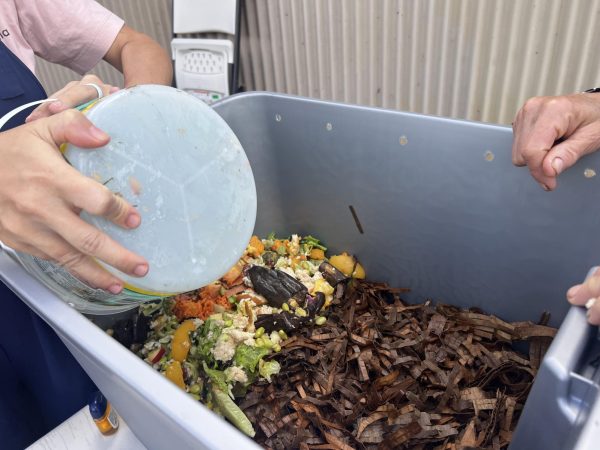
Using a bin, newspaper, and Noelani Elementary School’s discarded cafeteria food and used cardboard, students can create a space for red wiggler worms to break down food scraps into vermicast, or worm manure.
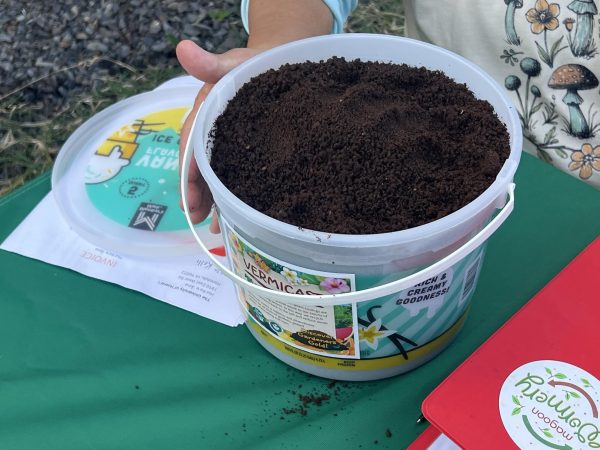
The vermicast looks similar to soil and contains nutrients and microbes that can be used for farming, gardening, and landscaping.
Jaffe aims to teach her students sustainable practices to reduce food waste that add to local landfills.
“We are making a huge difference,” said Jaffe, describing how people can make a big impact with little things like a box of worms under a tree in their backyard.
Worm Ohana encourages students to report data, including how many pounds of food waste they give to worms.
Jaffe and Worm Ohana have diverted 47,192 pounds of food waste from landfills since Sept. 26, 2020, according to the organization’s website.
From the legislature to the classroom
Jaffe was not always known as the “Worm Poop Lady,” as she says her neighbors affectionately call her. Before she began practicing vermicomposting, Jaffe served in the Hawai‘i House of Representatives.
Jaffe represented the Diamond Head, Kaimuki, Kapahulu, and Waikiki areas as a Republican from 2001 to 2002, serving on the Energy and Environmental Protection Committee.
“It was the worst experience of my life,” said Jaffe. “You go in there thinking, ‘I can make a difference, I’ve got good ideas, and I can convince people to do things.’ Then you realize, and it didn’t take me long, it’s all about the money, and it’s very corrupt.”
Jaffe recalled discussions in meetings about finding a place for a new landfill. Through these discussions, she thought ‘Why is nobody asking what we can do to reduce waste?’
Jaffe said she remembers being shocked that no one was asking how to reduce waste and was instead using meetings to find a new landfill location in Hawai‘i.
Once Jaffe began looking for waste reduction methods herself, she was impressed by functioning programs in several mainland states.
The findings inspired her to look into vermicomposting, which she said was widely adopted in multiple states at the time, including Texas.
She said vermicomposting was everywhere she looked, and she was impressed by the convenience and accessibility of the process.
Jaffe left the House and began her search for composting worms across O‘ahu. She asked state departments, Bishop Museum, and the Honolulu Zoo, but information on composting worms was limited.
Nine months later, a Waimanalo farmer contacted Jaffe and supplied her with her first worms. After feeding them with food waste from neighbors, she realized she had the beginnings of a business.
Jaffe started the Waikiki Worm Company in 2004 and began selling worms to people who had practiced vermicomposting on the mainland but couldn’t find worms in Hawai’i.
Jaffe continued visiting farms to collect manure worms, and eventually found the Petersons’ Upland Farm in Wahiawa.
The farm agreed to supply the worms in exchange for an opportunity to learn about vermicomposting. The Petersons’ farm would go on to supply Jaffe worms for 11 years without taking a single dollar.
Over the years, Jaffe’s business grew. Today, one of her largest customers is a Waianae farmer who purchases all of her annual hot compost inventory. The sale amounts to thousands of dollars and helps sustain the organization.
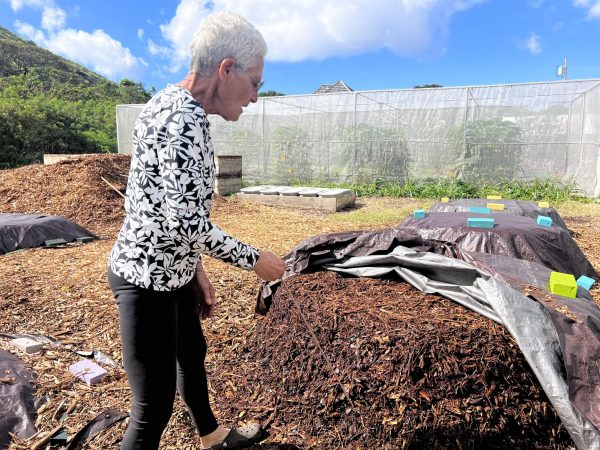
Jaffe also supplies worms to thousands of residents interested in waste conservation and maintains one of the largest breeding stocks on O‘ahu.
Running Worm Ohana is demanding work. Jaffe’s days often begin at 4 a.m. and stretch until 11 p.m., filled with feeding worms, maintaining compost piles, screening compost, answering customer inquiries, and collecting food waste from community partners.
“The work is mostly grunt work,” she said, noting that volunteers often lose interest once they realize the job involves screening compost and washing buckets.
She employs one part-time worker and relies on a longtime unpaid volunteer, with occasional student help that can be inconsistent due to school schedules. Beyond the physical labor, she said managing emails and technology has become one of her biggest challenges.
“I would rather feed worms, work piles, move mulch, wash buckets—anything but sit at that computer,” she said. “I would love for someone to take that over.”
Weekend Workshop at UH Mānoa
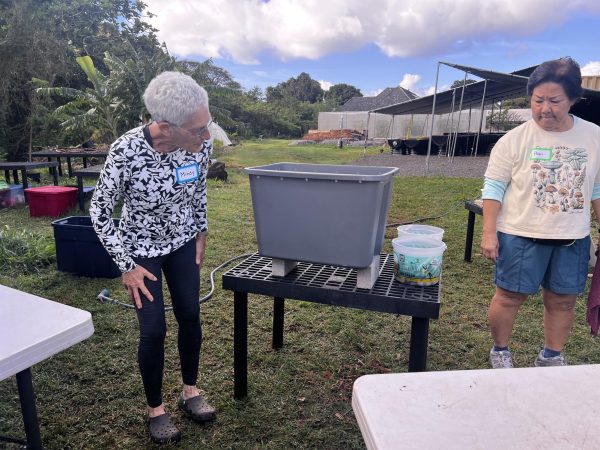
Kelli Liu, a Nankuli kindergarten teacher, her partner Chance Inoshita, and Julia Avila, an assistant extension agent at the Department of Tropical Plant and Soil Sciences at the University of Hawai‘i all attended Jaffe’s workshop on Feb. 28.
“I heard how good composting is with worms, so I was interested in that,” said Liu. “This one seemed like the most accessible.”
Liu said she found Jaffe’s workshop online while pursuing interest in environmental sustainability and gardening.
Liu was eager to learn and potentially teach her kindergartners about Jaffe’s methods, while admitting that she doesn’t have a green thumb.
Avila, a Hawai‘i resident since 2023, said she has experience in composting from her former apartment in Brazil and wants to learn more about sustainability for her career at the university.
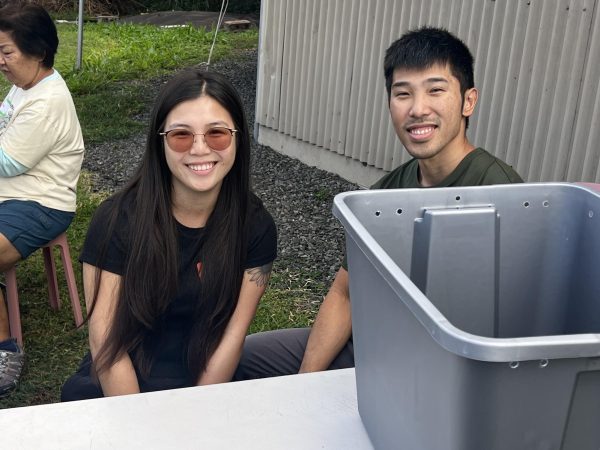
“I would like to adapt my knowledge to the context of Hawai‘i, the different areas,” said Avila, adding that she wanted to know the best techniques for Hawai‘i’s unique and diverse ecosystem.
Pam Kino, a retired school counselor, has volunteered with the Worm Ohana for about a year and a half. She said her mission is to educate people about the value of food waste and how it can be used sustainably.
Kino said making vermicast is “something that everybody can do, and everybody should do.”
Creating worm bins
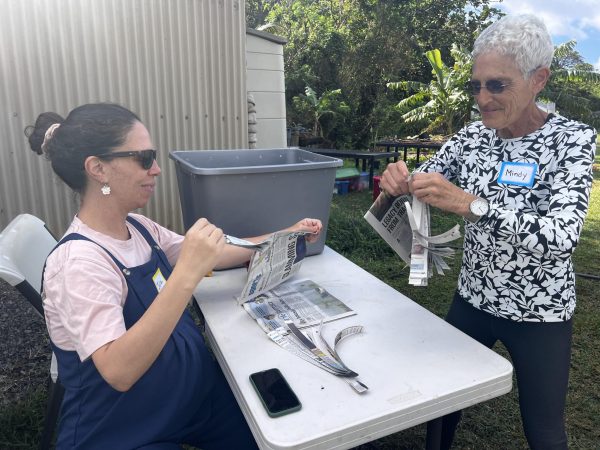
Jaffe provided a kit for each of her students, complete with about 4 ounces of live worms and valued at $95.
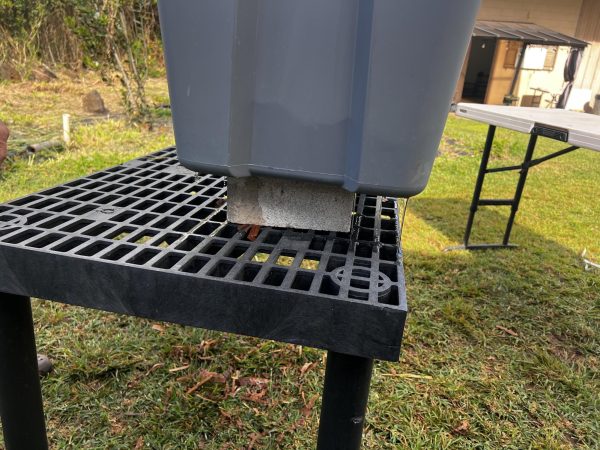
Jaffe instructed her students to place the bin in a shady space, since worms are afraid of light. She instructed them to elevate the bin because it will have to be watered every day, and the liquid must drip from the bottom.
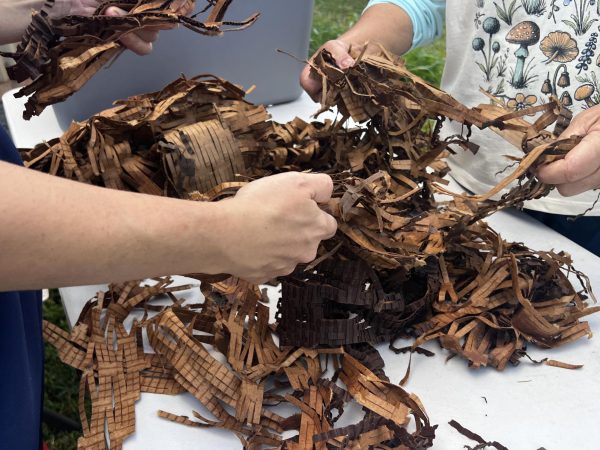
The students created bedding for their worms by ripping newspaper and moist cardboard into strands and laying it in the bin.
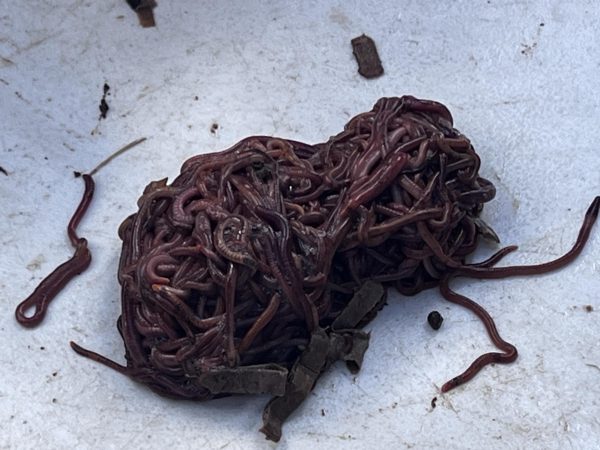
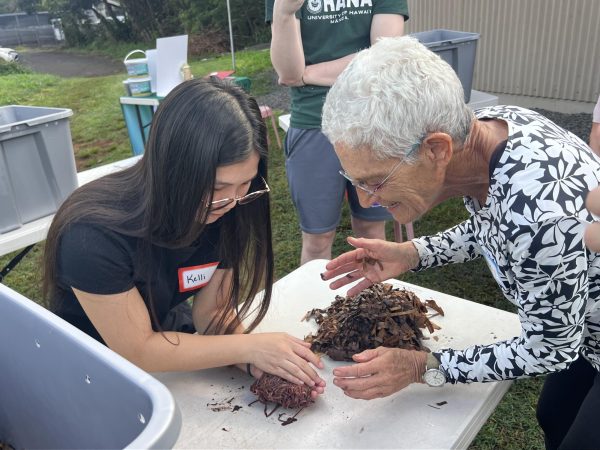
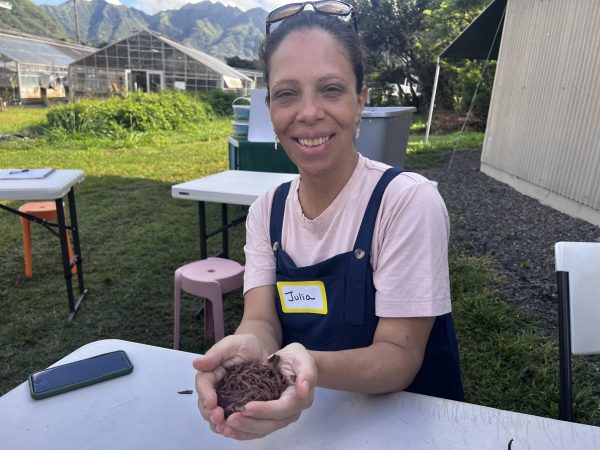
Finally, Jaffe had the students hold their worms with their bare hands and take pictures.
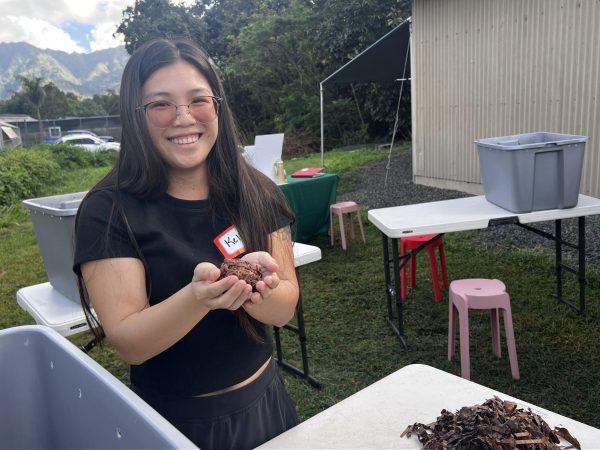
Jaffe said the worm colony would grow over time, and the next time her students held their worms it may take two hands instead of one.
She has also developed a line of worm bins designed to address drainage issues, in addition to standard bins.
The bins range in price from as little as $20 and are designed for small living spaces, which is common in Hawai‘i. Jaffe said the goal is to make vermicomposting accessible even to residents without large yards.
For more information on the bin-making process, visit the Worm Ohana Website.
Liu enjoyed the two-hour workshop on vermicomposting, saying Jaffe seemed passionate about her work.
“I really enjoy her passion,” said Liu.
Liu plans to take Jaffe’s teachings into her kindergarten classroom to teach her students about how to make food waste useful instead of throwing it away.
Inoshita said the workshop made him think about the amount of food waste and consider minimizing his impact.
Avila called Jaffe’s initiative impressive and said she plans to share the knowledge with her community to do similar sustainable practices in a shared garden.
She reflected on how one small action can have a big impact on the environment.
“It’s kind of my small action that will save so much from nature and money from the government,” said Avila.
Jaffe believes that no matter the size of the workshop, getting people involved changes their lives.
“Let me get worms in your hands,” said Jaffe, “Because this will change your life. It will change the way you see the world.”