
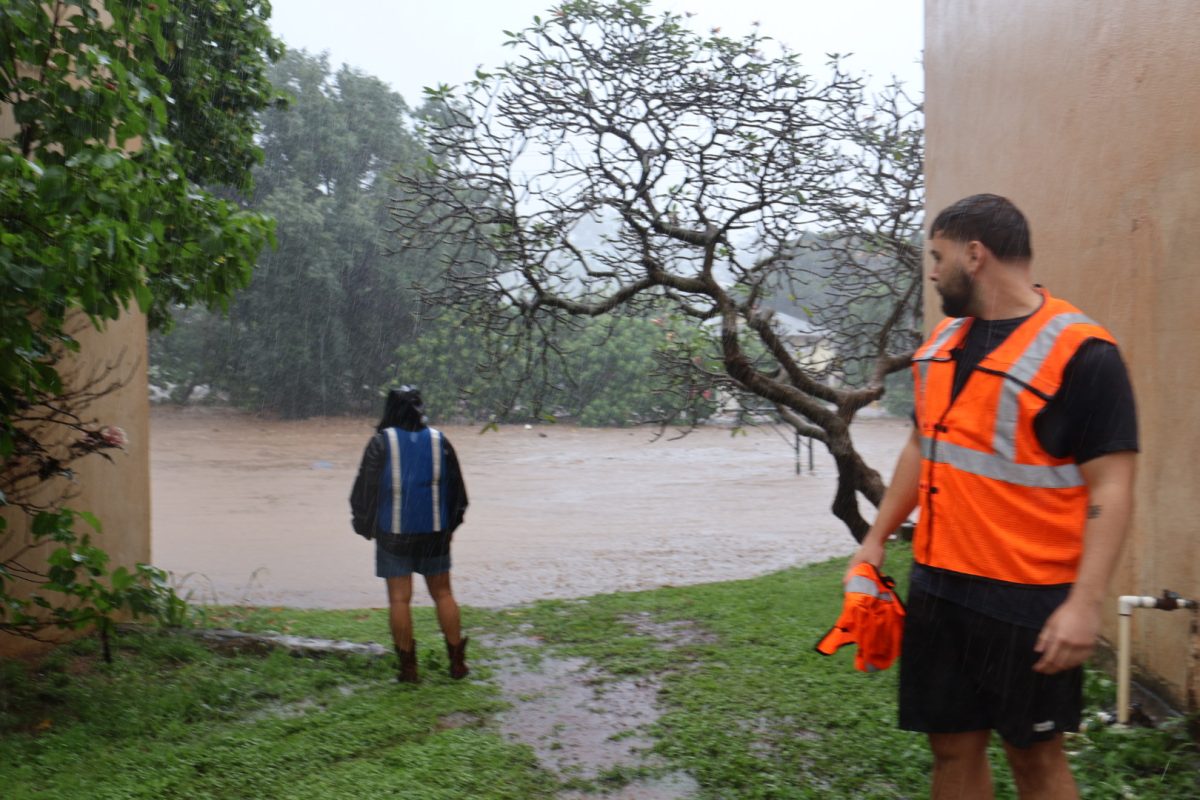
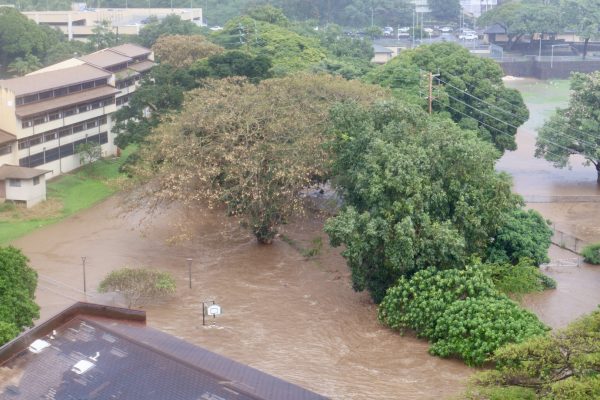
Julien Wooton, a first-floor resident of the Wainani low-rise buildings, was just hanging out in his living room when “the RA dude came and pounded on the door and told us that we might have to evacuate in a minute because the river is rising.”
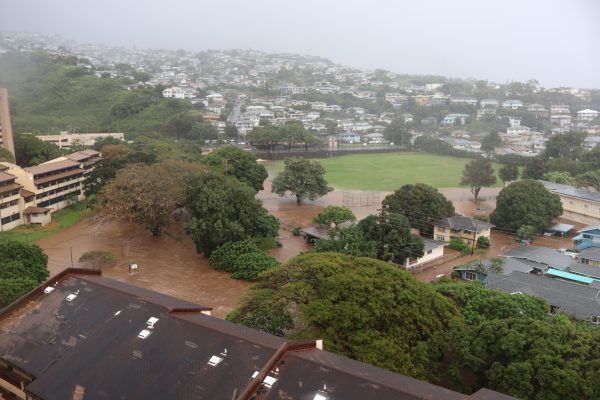
“I went to look out the window over there, and it was like 12 feet from the edge of the wall,” said Wooton.
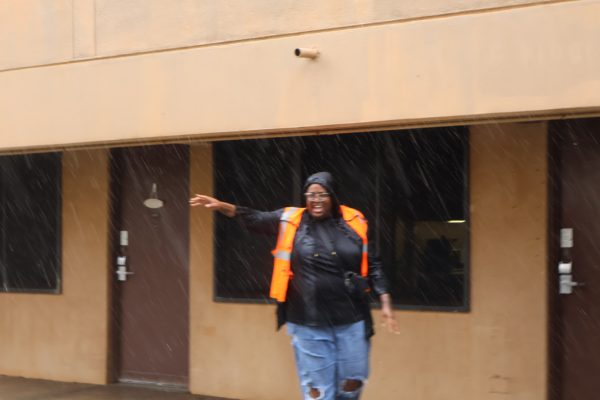
In the time it took Wooton to unplug all his outlets and place his belongings on top of his bed, the water seemed to have approached around 5 feet from the wall.
“And that’s when he [the RA] really started yelling at people to evacuate,” he said.
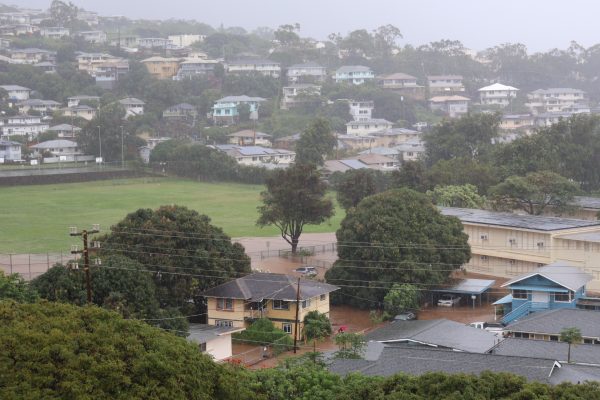
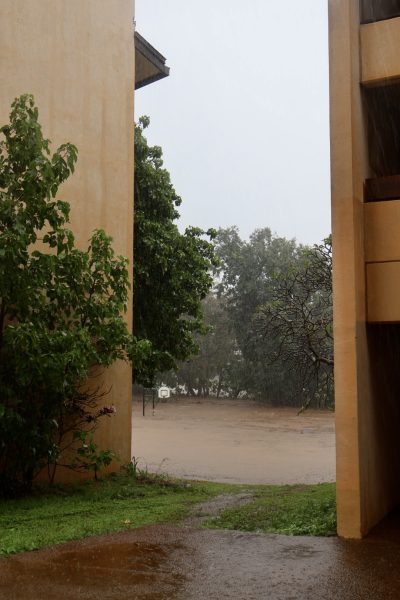
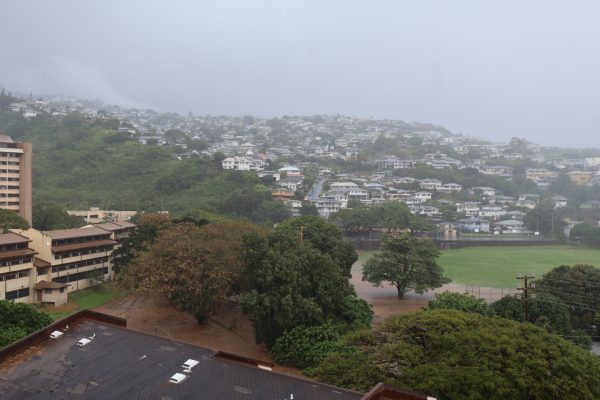
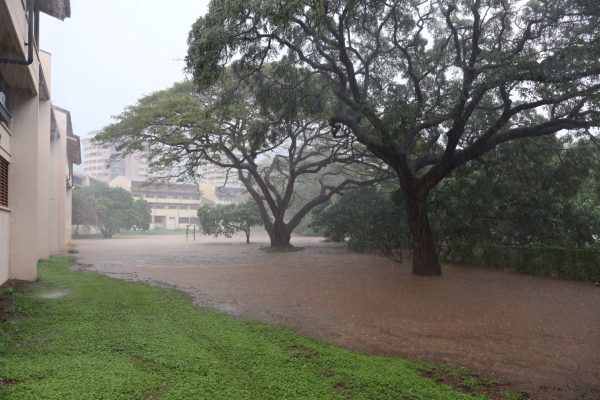
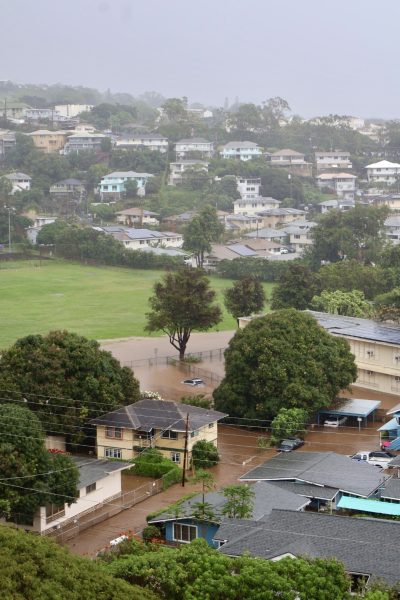
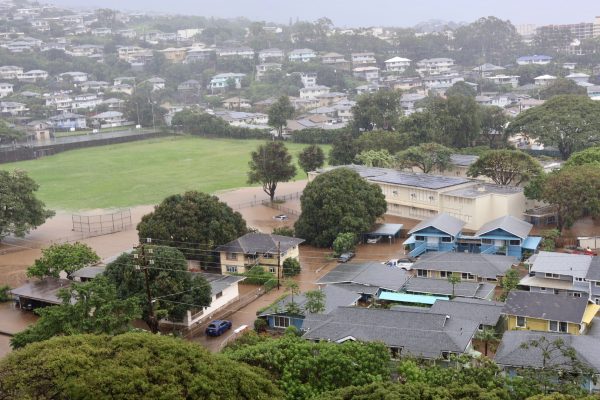
A statewide average of 18.25 inches of rain fell between March 1 and March 23, which is 2.6 times the March average of 6.85 inches, according to UH News. Within the Mānoa and Palolo valleys, heavy rain caused by a stationary storm cell dropped 2 to 4 inches of rain per hour, resulting in the flash flooding across UH Mānoa campus.
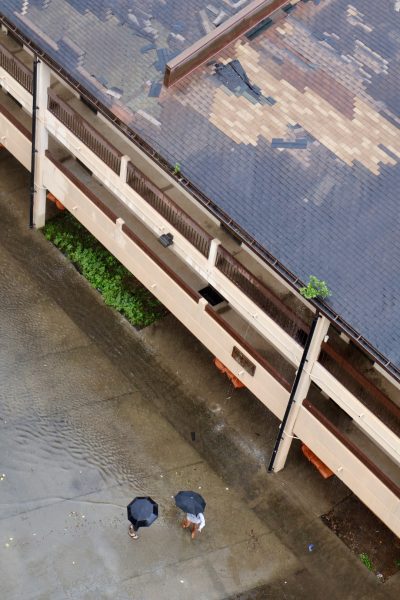
Campus UH Monday, March 23, 2026. (Lauryn Johnson)
On March 23, just after noon, the Student Housing office was notified by a concerned parent about rising water levels in the Mānoa stream behind Wainani. At 2:17 p.m., students and staff were informed by a UH Department of Public Safety email to seek shelter inside, while others in the Wainani low-rise were told to evacuate. In the midst of this chaos, resident directors (RD) and resident assistants (RA) took on leadership roles to evacuate students from their dorms.
Zach Quemado, an RA for the freshman dorms, said, “For situations like this, our training was mainly to have residents keep clear of the area.”
Some staff were asked to help out by keeping residents away from the Mānoa stream as the water spilt over near the freshman dorms, while others helped guide residents out of Wainani G and H.
Wooton gathered his things from his dorm, including an umbrella, and walked over to the Wainani high-rise lounges. He asked the RA on duty where to evacuate to because the RAs going door-to-door hadn’t specified when they first came by. On his way over, Wooton had been asked by someone dressed as an officer if an evacuation was underway yet, and he said yes.
In the Wainani high-rises, residents stay in place, viewing the disaster unfolding below. “From the eighth floor, I heard someone scream, ‘evacuate’ from below,” said Jaylin Couch.
“There was a guy with no shoes on yelling at people to leave, like the flood was at the doorsteps of the lower apartments, and it kinda was,” Couch added. Confusion seized students who were not briefed on evacuation notices.
Some residents were not in the dorms at the time of the flooding and instead returned out of concern for their belongings.
Aaron Nerenberg, who is also a first-floor resident from the Wainani low-rise buildings, had been stuck at the upper campus during the heavy rainfall.
“I ran back because I was thinking, not just my stuff…but my roommates,” he said.
Nerenberg made his way back to his dormitory around 2 p.m., where he described that the flash flooding reached its peak, and he was not allowed to enter the area by staff to risk water seeping into the rooms. Before the rainy season had started, Student Housing placed sandbags in front of first-floor dorms as a precaution for rainwater seeping into these apartments.
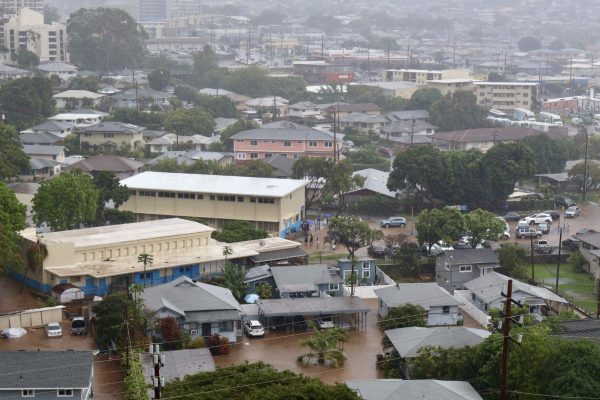
“I talked to the RAs, they said it was best to wait,” said Nerenberg. “Even once we got confirmation… we still waited an additional hour because it was still raining incredibly heavily.”
In the following hours, the Mānoa stream lessened in intensity, and the stream did not breach the Wainani low-rise buildings.
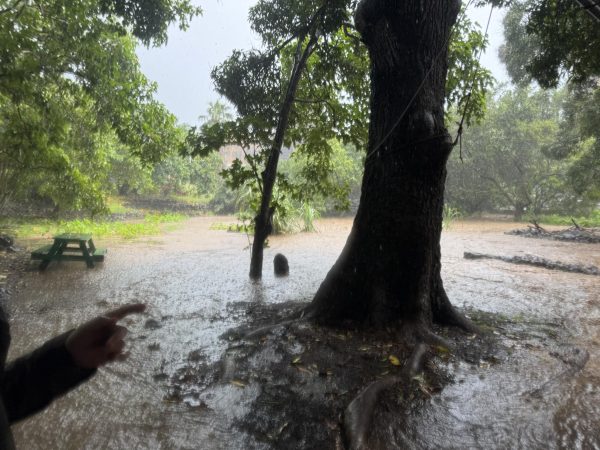
On the other side of the Mānoa stream, the Hawaiian studies center was not as lucky. Quemado, who was headed back to the dorms via the rainbow shuttle, passed by the Hawaiian studies center.
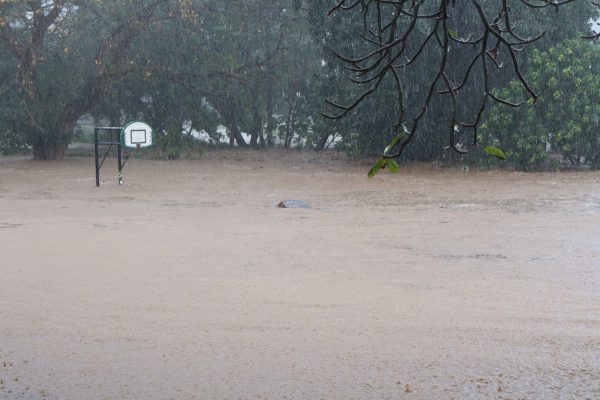
“People were talking about the loʻi and stream being fully flooded,” he said. “I knew it was pretty bad, but seeing the loʻi flooded, and the river is what shocked me the most.”
Hauola Roback, a worker at the Hawaiian studies center, shared several videos taken during the peak of the flooding, which showed the entire loʻi covered in water.
“Even my boss…he’s been here for years and years, and he’s seen lots of floods, but this one he wasn’t really expecting,” Roback said.
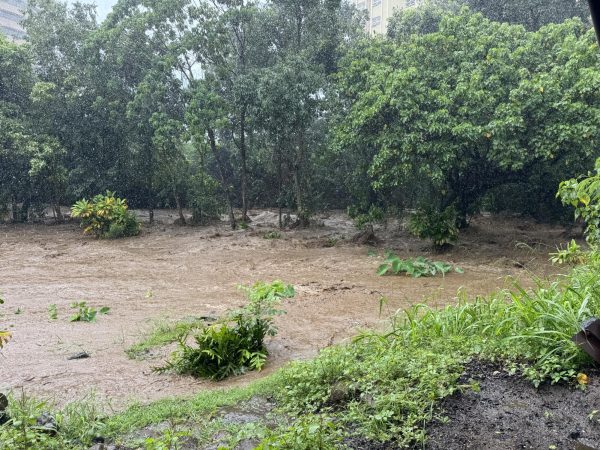
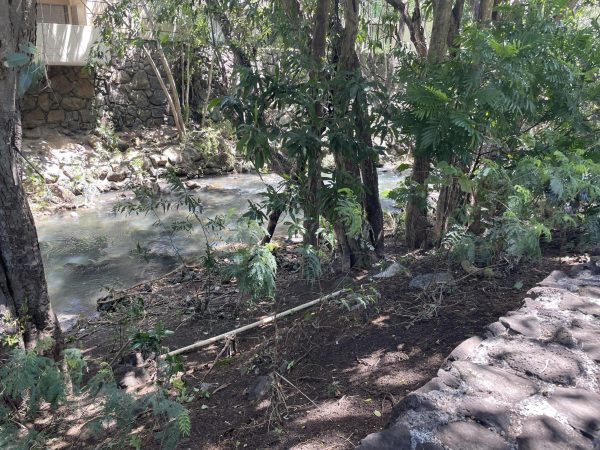
Lason Napuunoa is another worker at the Kamakakūokalani Center for Hawaiian Studies who has been helping out since 2022. After the water receded into the stream, Napuunoa assessed the damage to the property and loss of tools. These included the shed, toolbox, signs, benches, some of the crops, and Traditional Hawaiian stone walls or uhau humu pōhaku.
“I think the thing that we are most worried about is preserving the [Kalo] varieties,” said Roback. “But everything else, our benches, our tools, our shed, shovels, our bridges, and stuff like that, are replaceable. And we’re not.”
In preparation for rain, the crew will turn off the water system from the river.
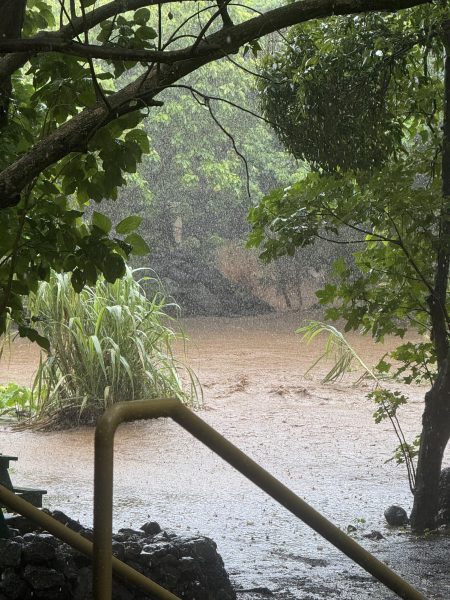
“If we know it’ll come down, the benches will be moved, and signs will be fastened securely,” Roback said. “But it was sunny that morning.”
Emergencies can happen at any moment, which is why it is important to be prepared.
Nerenberg is experienced in dealing with flash floods, having grown up in California. Of the three years he’s lived in the Wainani dorms, he notes that his concern for flooding was particularly stressful because this was his first time experiencing a flood while living in a ground-level apartment.
As a senior in sustainability and urban planning, Nerenberg pointed out a gap in communication between UH and students. Although the Department of Public Safety is meant to provide tips to students on campus, updates on crime, and other news, Nerenberg said there doesn’t seem to be too much focus on tips for emergency procedures and emergency preparedness.
A Student Housing representative, who wished to be unnamed, mentioned that the staff, RDs, and RAs handle these emergencies on a case-by-case basis. There is no standard procedure to approach these emergencies, which leave students in the dark while making potentially life-saving decisions.
Although RDs and RAs communicate directly with their residents through community group chats, such as GroupMe, and going door-to-door, there are limitations to what Student Housing can do to enforce safety measures.
“They only have posters up for fire safety stuff. That’s about it, that I’ve ever seen.” Nerenberg said.
This was also evident with the state-wide blackouts caused by the Kona storm, where Nerenberg and his roommates experienced issues with their fire alarm system and Wi-Fi, not being informed when these issues were finally fixed.
“I want to know how this school will figure out how they’re going to grow the campus in a way that doesn’t end up just kind of adding more risk for their housing (and other building units) to get their systems rocked by a bit of water,” said Nerenberg.
As the community comes together to rebuild the stone walls and clean up the debris at the Hawaiian studies center, students call on UH Mānoa to address how it will approach future emergencies.
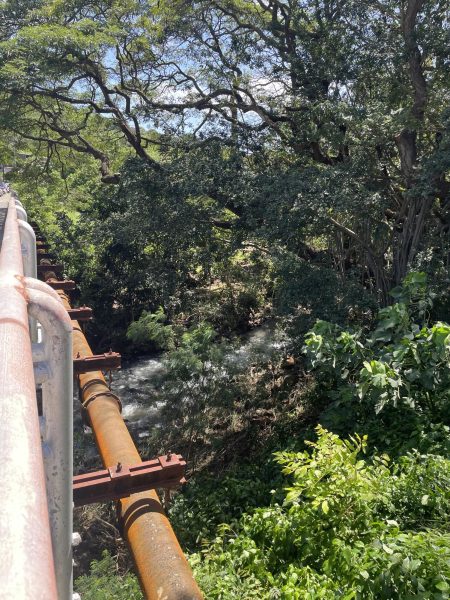
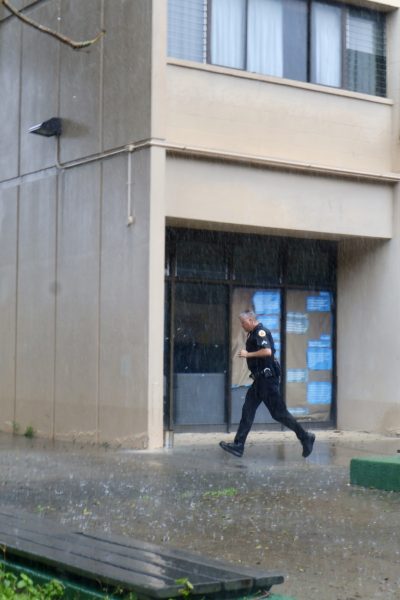
2026. (Lauryn Johnson)
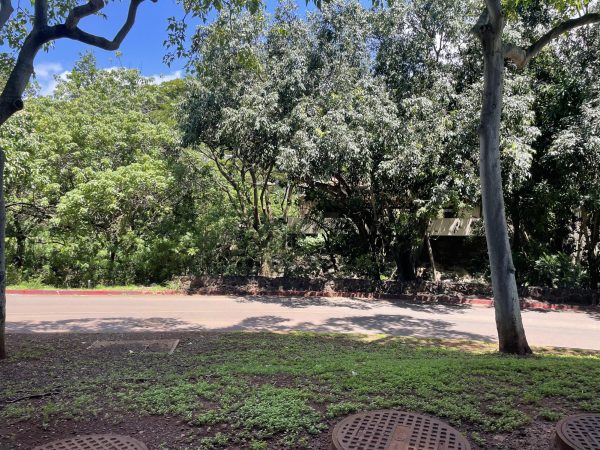
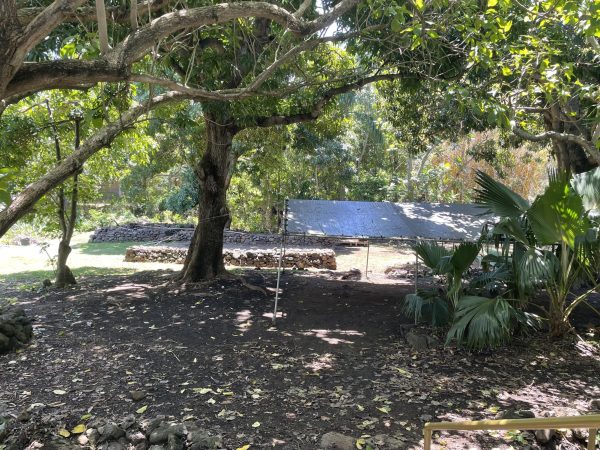
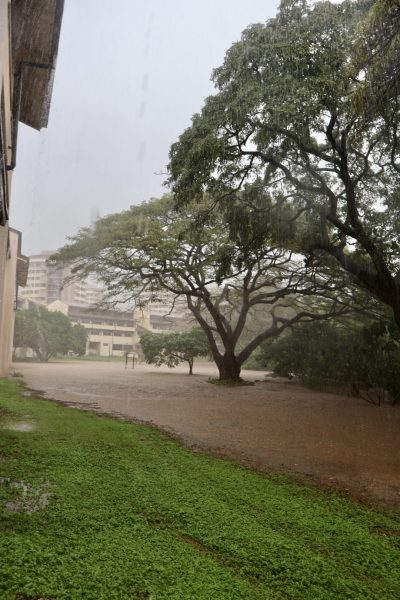
23, 2026. (Lauryn Johnson)