


Ramadan is deeply personal for Ameer Abd-Al-Khaliq, a mechanical engineering student at the University of Hawaiʻi at Mānoa.
“The most meaningful part of Ramadan for me is the feeling of cleanliness afterward. It feels like taking a really good shower after a long hike,” he said, capturing how the practice of fasting and devotion leaves both body and spirit restored.
Muslims fast daily between fajr, the pre-dawn prayer after eating the pre-fast meal known as suhoor, and maghrib, the sunset prayer when the fast is broken at iftar. This lasts 29 to 30 days according to the Islamic lunar calendar, concluding with Eid al-Fitr, the celebration marking the completion of Ramadan, and later in the year, Eid al-Adha, commemorating Sacrifice.
Islam provides exemptions from fasting for those who are ill, pregnant, breastfeeding, menstruating, below the age of puberty, or the significantly impoverished. Missed days can be made up later, reflecting the principle of ease.
For Abd-Al-Khaliq, preparation for Ramadan requires intention and planning.
“To prepare for Ramadan, I usually give my friends a heads-up that I’ll have less energy during the day,” Abd-Al-Khaliq said.
He maps out life in advance, knowing that assignments that would normally take two to three hours may need to be spread out over a couple of days.
Muslim Association of Hawaiʻi (MAH) statistics indicate that “Muslim men and women from over 36 countries of differing backgrounds, races and cultures pray next to each other in peace throughout the year.”
MAH has stood for over 50 years as one of the only operational masjids on the island. Purchased in 1979, it is the spiritual and social heartbeat of Hawaiʻi’s small yet globally rooted Muslim population.
Abd-Al-Khaliq said his approach to Ramadan is shaped by both family background and campus life. He was born into a first-generation Pakistani household in England.
“My parents were pretty religious as they prayed five times a day, but they never forced me to do the same,” he said.
On Oʻahu, access to communal worship looks different than in larger continental U.S. cities. Across the Pacific, 2,400 miles away at the University of California, Davis, Zeeshawn Mahmood Khan’s Ramadan experience unfolds differently. Born and raised in California to first- generation Pakistani parents, Khan is a 20-year-old pre-med student. His faith centers everything.
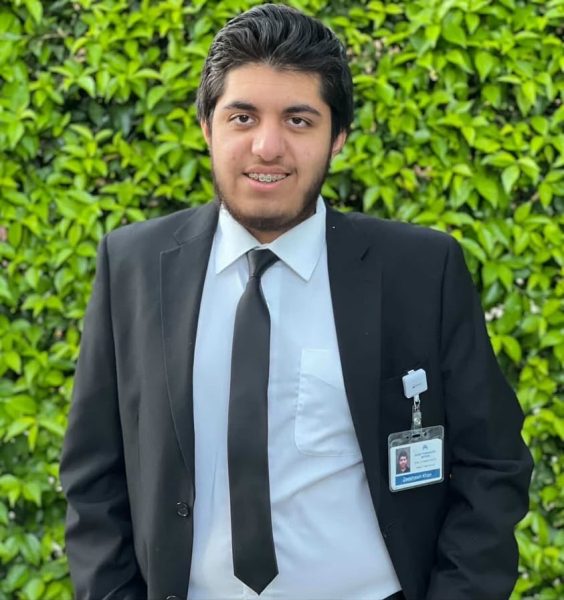
“Islam is a huge part of my identity,” Khan said. “I’m committed to bettering the future in my own way.”
Since high school, he has volunteered with the Sacramento Fire Department and worked as an EMT, in addition to serving at medical centers. He connects this service directly to Islamic teaching of caring for all of God’s creations.
“The beauty about Islam is that nothing is too basic,” he said. “The basics are the most encouraged and most incentivized.”
While Hawaiʻi’s Muslim community revolves around a single primary masjid, the Islamic Center of Davis, founded by students in 1982, sits within walking distance of the college campus.
“There are five to ten thousand Muslim students in Davis at a time,” Khan said. “The demand is significant.”
That wasn’t always his experience. In elementary school, he searched for empty classrooms or offices to pray. In high school, administrators eventually provided a dedicated space where Khan invited four to five other brothers to join.
On the other hand, Abd-Al-Khaliq grew up in a predominantly white neighborhood after his family moved from a Muslim-majority area in England.
“Growing up, I always felt a bit different from my classmates, who didn’t really understand why I didn’t eat pork or celebrate Christmas. That said, it never got in the way of making friends,” said Abd-Al-Khailiq.
Every now and then Abd-Al-Khaliq introduces curious individuals at Mānoa to Islamic practices.
“After I explain what Ramadan is, there are always a few friends who say they want to try fasting. They usually stop after the first day,” he said with a laugh.
For ambitious peers, preparation for Ramadan should begin long before the first fast. Khan suggests getting used to going out of their way to do good deeds.
Once the month starts, he describes it as “insanely rewarding.” Even small acts—being more patient at home, more tolerant at work, complimenting someone—become spiritually meaningful.
“Make that part of your personality,” he said.
He recommends fasting on Mondays and Thursdays, following the Sunnah tradition, to build stamina and discipline before Ramadan begins.
Khan noted that reducing screen time is one of the biggest challenges young Muslims try to tackle during Ramadan.
For both students, Eid represents joy and relief after discipline. Eid al-Fitr comes the day after Ramadan ends. Eid al-Adha, often the more publicly visible celebration in his neighborhood, centers around sacrifice. Families may purchase a cow or sheep from a farm, distributing portions of meat to neighbors and those in need. Many Muslims take time off work or school for both holidays.
“It’s a blessing to get through the month while maintaining your other priorities,” Khan said. “It’s about locking in the good habits to carry with you for the rest of the year.”
Access to halal food, however, can be challenging in Hawaiʻi.
“A lot of places either serve pork or are just too expensive,” Abd-Al-Khaliq said.
Wealthy diversity collides like this frequently in the melting pot of the Pacific, especially on O’ahu. Countering this foreseen challenge, the Muslim Student Association at UHM provided free date boxes for students distributed during the first week of Ramadan and continues to stay active on social media accounts.
Ramadan is also the month many Muslims fulfill zakat: the required charitable contribution of 2.5% of one’s accumulated wealth. This good deed multiplies in the holy month.
“The right of the poor is in everybody’s wealth,” Khan said. “They need to be supported. It’s a human right, water, food, housing.”
He described zakat not as optional generosity but as structured social responsibility.
Many donate during Ramadan because good deeds are believed to multiply in reward. Contributions often go to food banks, local charities or international relief organizations such as the Palestinian Red Crescent Society.
“It’s fulfilling,” Khan said. “You’re not just meeting an obligation; you’re helping better society.”
He mentioned that man-made social and political infrastructures like capitalism and communism fail to tackle poverty, compared to the dependable zakat, as it is one of the five Islamic pillars.
Globally, Islam is the world’s fastest-growing religion and is predicted to grow faster than Christianity by 2050, according to World Population Review. Estimates project that by mid-century, roughly one in three people worldwide could identify as Muslim. Trends suggesting women convert at higher rates than men, describing a ratio of approximately 4-to-1.
“Islam emphasizes mercy and compassion just as much as discipline and devotion,” Khan said. “The beauty as a Muslim is striving to find that balance- not just being focused on yourself but giving attention to the places around you and the people in them.”
“Yes, we pray five times a day. Yes, we read Qur’an,” he added. “But everything we do in life is to have a positive impact. It’s the striving that it’s all about.”
Khan also clarified that jihad, often misinterpreted in the media, fundamentally refers to struggle, the internal effort to improve oneself.
“There is no middleman between you and God,” Khan added. “God is accessible.”
As Ramadan continues in universally, Muslims remember Surah Al-Baqarah 2:185:
“…Allah intends ease for you, not hardship, so that you may complete the prescribed period and proclaim the greatness of Allah for guiding you, and perhaps you will be grateful.”




Cindy Scheopner • Apr 2, 2026 at 4:32 pm
Well done! Excellent explanation!
Lili Hurd • Mar 17, 2026 at 8:59 pm
Good job Laurynnn!!