
This story was originally published on December 11, 2025
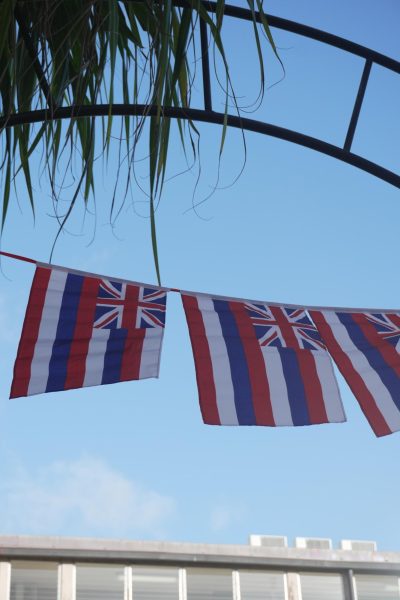
In the 1800s, King Kamehameha III of the former kingdom of Hawaiʻi proclaimed the phrase, “He aupuni palapala koʻu.” Or, in other words, “Mine is a kingdom of education.”
With a whopping rate of 91% to 95%, the kingdom of Hawaiʻi was once considered one of the most literate nations in the world. Due to a number of factors, this percentage has since plummeted over the years.
To combat this trend, initiatives like the Native Hawaiian Student Services offer a myriad of programs targeted toward uplifting Hawaiian students in higher education.
For junior Keanu Suyat-Okamoto, the efforts of the Native Hawaiian Student Services went beyond simply providing a space. It allowed her to meet a community that welcomed her.
“It’s really hard to connect with other people,” Suyat-Okamoto said, “so that was a big thing for me.”
The Native Hawaiian Student Services even gave her opportunities that she otherwise would not have had, like the program’s summer institute, which enabled her to take free courses that helped with completing graduation requirements over the years. She also noted the Hawaiian Youths Abroad program, which mimicked a similar program initially installed by the previous king of Hawaiʻi, King Kalākaua.
The mission of Native Hawaiian Student Services, or the NHSS, is to mostly serve Hawaiian students. Designed to increase their retention rate in higher education, the support caters to a diverse range of students and their needs, from scholarships to culture-based workshops. It even supports Hawaiian students who moved away from Hawaiʻi then later returned through its Diaspora Bridge Program.
Supporting these students and the community could not be achieved without grants designated to support Minority-Serving Institutions. With the loss of these same grants, their efforts have become hindered.
THE STRUGGLE TO SUPPORT —
With Donald Trump’s return to presidency, a wave of changes now threatens the livelihood of minorities throughout the country, including students of color pursuing higher education in Hawaiʻi.
The Department of Education has announced the discontinuation of funds toward grants used by several programs at Minority-Serving Institutions. At the University of Hawaiʻi at Mānoa, the college once utilized 22 grants that amounted to $55.7 million. After the announcement, the college has since lost half of these grants, which is worth approximately $10 million. This has also resulted in a loss of major grants for the university’s Native Hawaiian Student Services program.
With these losses in grant funding, the Native Hawaiian Student Services is now battling new financial restrictions to their work as they continue to provide all the support that they can offer for the students that they aim to serve.
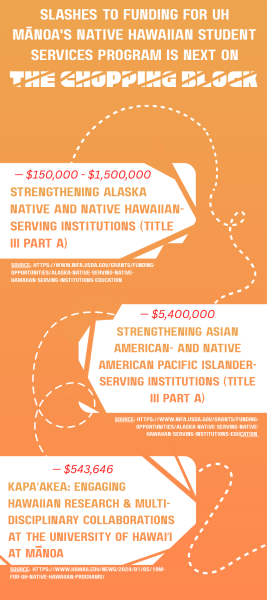
There are many staff within the Native Hawaiian Student Services who specialize in specific areas. One of which is Alicia Nani Reyes, who coordinates programs that are funded by the Kapa’akea grant.
“We’re living with a lot of uncertainty,” Reyes said about losing funding from particular grants. “Now it’s looking like we’re in this final year of funding and kind of unsure of where we’re gonna go from here.”
With these new changes, many federal grants under Title III: Part A will no longer be available, like “Strengthening Alaska Native and Native Hawaiian-Serving Institutions.” Although the program still has funding from the Kapaʻakea grant, which does not classify as Title III: Part A, this is also the final year that it can benefit from this financial aid.
Many of Reyes’ co-workers are also equally unsure of what will happen. Among her colleagues is Allyson Franco, the community outreach coordinator for the Native Hawaiian Student Services.
“For the entire year, we’ve been kinda walking on egg shells,” Franco said.
With the loss of these critical grants, it’s not just funding for its programs that are at risk. For student-workers, graduates, and even some staff, their jobs are in jeopardy as well.
“There’s at least four of them that get paid,” said research and program assistant Kalawaiʻa Jordan Nunies, as he went over the staff at the NHSS whose positions will remain despite the loss of grant funding. “But that doesn’t account for how this office has 20 workers under it.”
This impact even extends toward the interns that work under the NHSS.
“These are Native Hawaiian students who are out there in different research repositories and different schools,” Nunies added, “becoming the next leaders, educating youth, creating programming, and finding ways to reconnect Hawaiians to their Hawaiian identity.”
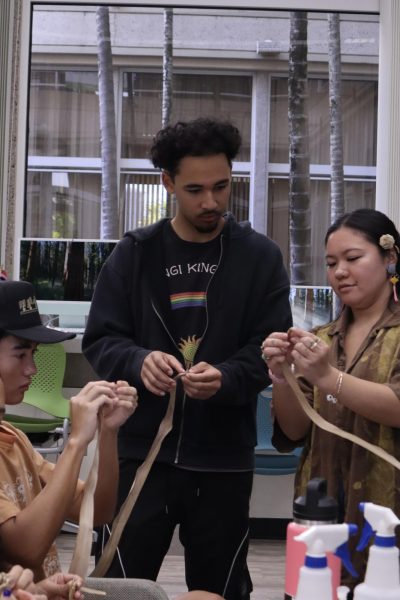
Grants serve as the foundation for the work of the Native Hawaiian Student Services. It funds their support programs, like the Diaspora Bridge Program. It funds their Kekaulike Internship Program, which offers Native Hawaiian students real work experience. Once these grants fade away, so too will all of these initiatives.
“If, and when, our federal funding gets cut, it’s going to make a huge impact on how exactly we execute our programming,” Franco stated.
PUTTING “UNITY” IN COMMUNITY —
While there is no denying of the dark days that are ahead for the Native Hawaiian Student Services, or any program at Minority-Serving Institutions, there is always a light at the end of those hard times.
“I really think it’s about being a part of the conversation,” Reyes said.
Along with all 10 UH campuses, other colleges in Hawai’i have also reported a devastating impact on its funding. At Chaminade University, it could lose roughly up to $9.5 million in funding. At Hawaiʻi Pacific University, it reported a loss of $1.5 million in federal grants. This impact goes beyond just college.
This loss in grants has also affected partnerships between local high schools and colleges that offer free dual-credit courses. This can impact student enrollment for colleges, as the loss of this program will no longer allow students to save money and time by completing prior requirements for degrees.
The discontinuation of these grants has impacted many aspects of education in Hawaiʻi, so much so that students and staff alike are even feeling these changes. Reyes states that, for now, the best course of action is to simply be there for one another.
“It’s like a big step,” she said, “and it doesn’t just take us and NHSS advocating. It really does take a community too.”