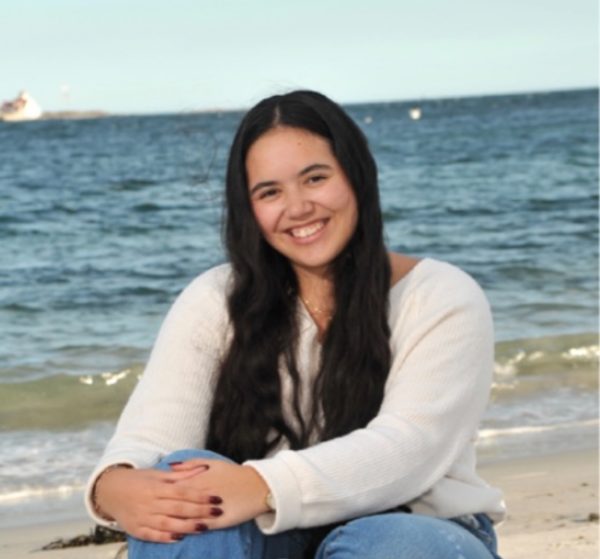


Pinned sideways under the finger pier, Cynthia’s sailboat was saved only when a neighbor jumped aboard and tilted it upright.
One night, Cynthia Scheopner woke up noticing her liveaboard sailboat “Wind Warrior” seemed a bit lopsided.
After climbing up to the top deck she noticed how low the tide had fallen which led to her boat dipping underneath the pier at the Ala Wai Small Boat Harbor when the water rose again. Scheopner, who was alone at the time, did not know what to do.
Quickly, her neighbors noticed the panic, as well as Scheopner’s mast towering over their own boat. The couple next door came up with a plan: causing a shift using the force from jumping from one ship to the other.
After the grand jump, Scheopner’s boat was safe.
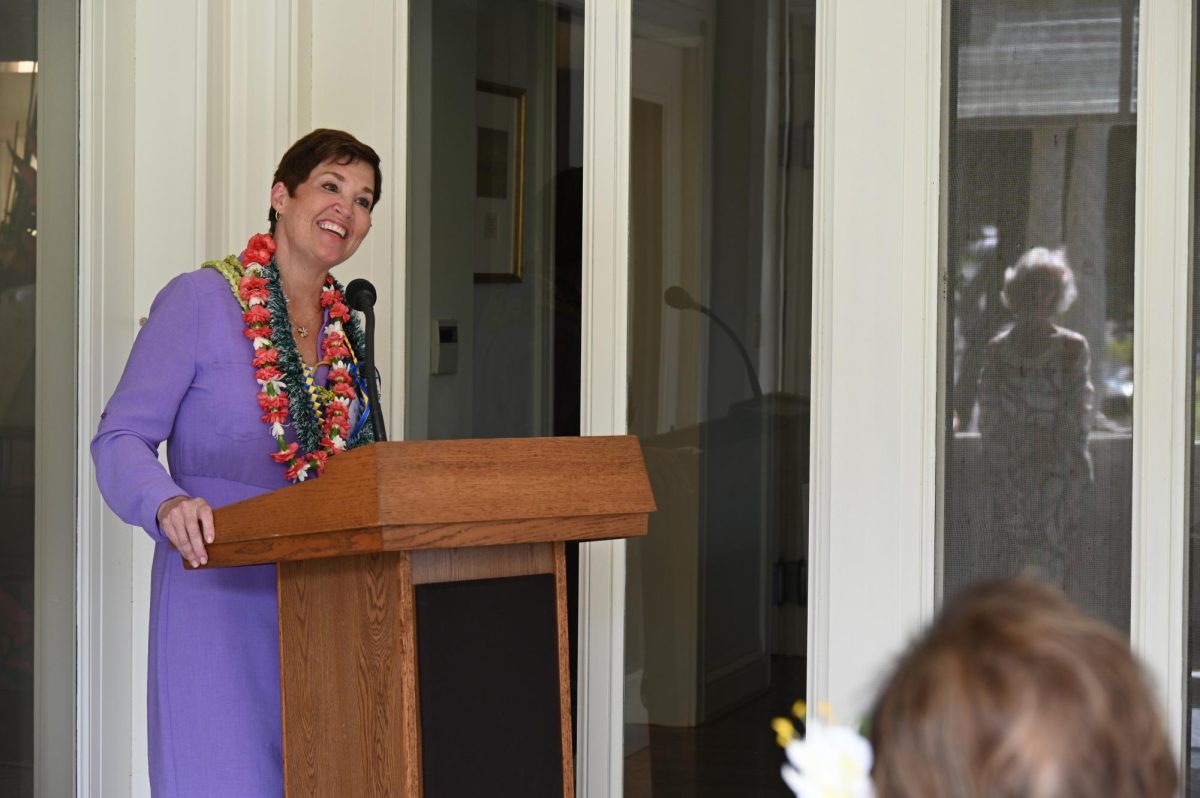
“It helps to have good neighbors,” Scheopner, a UH Mānoa professor, said.
Scheopner and her neighbors are part of a small community of roughly 165 people in O’ahu who live aboard a boat.
The Ala Wai and the Keehi Lagoon are the only two boat harbors that allow people to live on their boats. The Ala Wai offers 129 permits and the Keehi Lagoon offers 35.
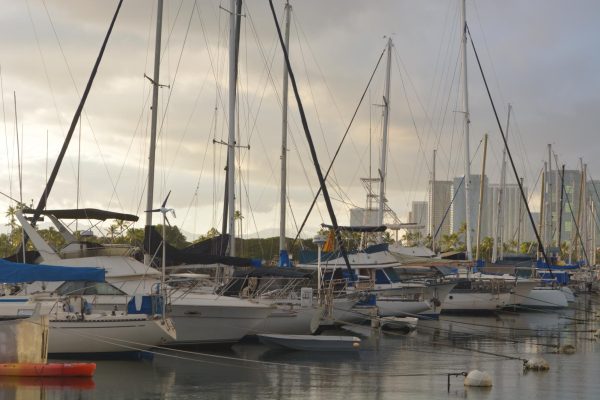
With some of the nation’s highest housing costs, more people are beginning to consider life aboard. The reality is far more complex than it may seem.
Long waitlists and strict permitting rules make it difficult for newcomers to be accepted.
To the Water
It was 2008 when Scheopner and her husband Richard Denton moved to Kailua, O’ahu from Boulder, Colorado.
Scheopner was attending UH Mānoa for her PhD in philosophy, and in her free time she and her husband took sailing lessons in Kaneohe Bay.
Living on a boat has always been in the back of their minds.
However, the process of getting settled in Hawaii was more complicated than buying a boat. In order to buy a boat you need to own a slip in the harbor. This meant waiting lists, planning, and a lot of patience.
“Each step of the way, I had to kind of maneuver something, but ultimately, I persevered and we ended up living on our boat,” Denton said.
Once the couple secured a slip in the Ala Wai harbor, they were allowed to move into the process of a liveaboard permit.
“Two years later, they offered me one. Then we were able to live on the boat,” said Denton.
Their boat then finally became a home.
Living Aboard
Life aboard a boat is far from effortless.
There is constant debate with space, resources, and the elements. Cooking, bathing, managing power and water, are all simple tasks that can quickly become complex.
Unexpected storms, heavy swells, and lightning are also something that needs to be considered daily.
Denton recalled a storm in Kaneohe Bay where lightning struck all around the boat. High winds, heavy swells, and sudden storms demand preparation.
“That was probably the closest I’ve come to being struck by lightning,” Denton said.
The boat itself is expensive, then throw in the slip and all the maintenance. The boat needs to be taken out of the water once a year to be cleaned and painted. Sails need to be replaced, riggings need to be replaced, and much more.
“They don’t show that in the commercials,” Scheopner said. “They show people sitting back with a hand on the wheel and a martini.”
A Community on the Water
Despite the challenges, the liveaboard lifestyle harbors a unique sense of community.
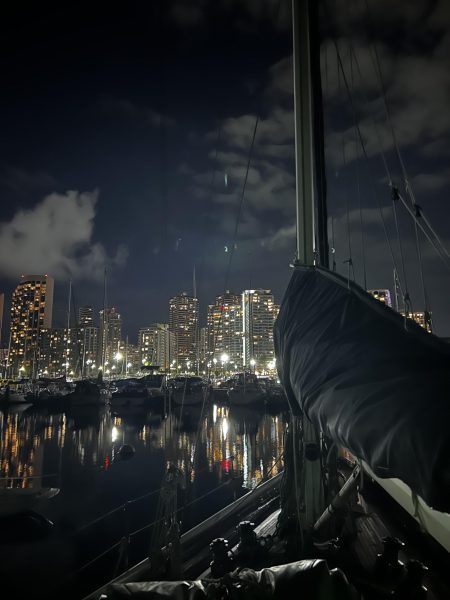
Denton described his typical Friday evening with other liveaboards. A group of them get together and race in boats and share advice and skills.
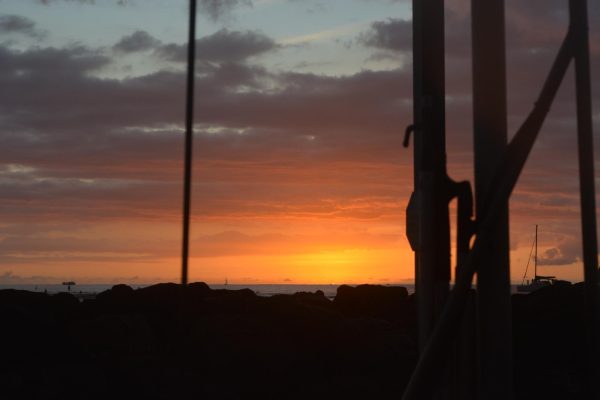
A lot of these buddies catch up with one another as they see each other sitting on the top deck.
(Angelline Little)
Many liveaboards rely on one another for advice, labor, and companionship.
Scheopner’s near disaster with her tipping boat illustrates this vividly: a neighbor’s quick action preventing serious damage or injury.
“I knew it was really bad,” she said, emphasizing the trust and co-dependence in harbor life.
Liveaboard Trends
The couple’s experiences reflect broader trends in Hawai’i’s liveaboard community.
Permits for dock space are limited, making access a challenge for newcomers.
Denton explained, “You have to have the slip first. Until I got a slip, I wasn’t even allowed to get on the waiting list for a permit to live aboard.”
This stepwise system can take years, oftentimes discouraging many “would-be” residents. At the same time, the scarcity of slips has led to creative solutions.
What Scheopner and Denton did was sign a partnership on a boat. This allowed them to gain hands-on experience while not really owning it.
The Call of the Ocean
Even with these difficulties, Hawai’i attracts a diverse group of liveaboards. Retirees, adventurers, and sailors are all drawn to the freedom of life on the water. Because of the range, they each find their own way to embrace it.
In Scheopner and Denton’s case, unexpected opportunities popped up. Their boat “Rocinante” will be appearing in a Maui film project that one of their friends is producing.
For Scheopner and Denton, life on board is wild yet perfectly right.
Their story shows that living aboard is not just about freedom, but also about responsibility, patience, and adaptability.
“Don’t wait too long on your dreams,” Scheopner said.