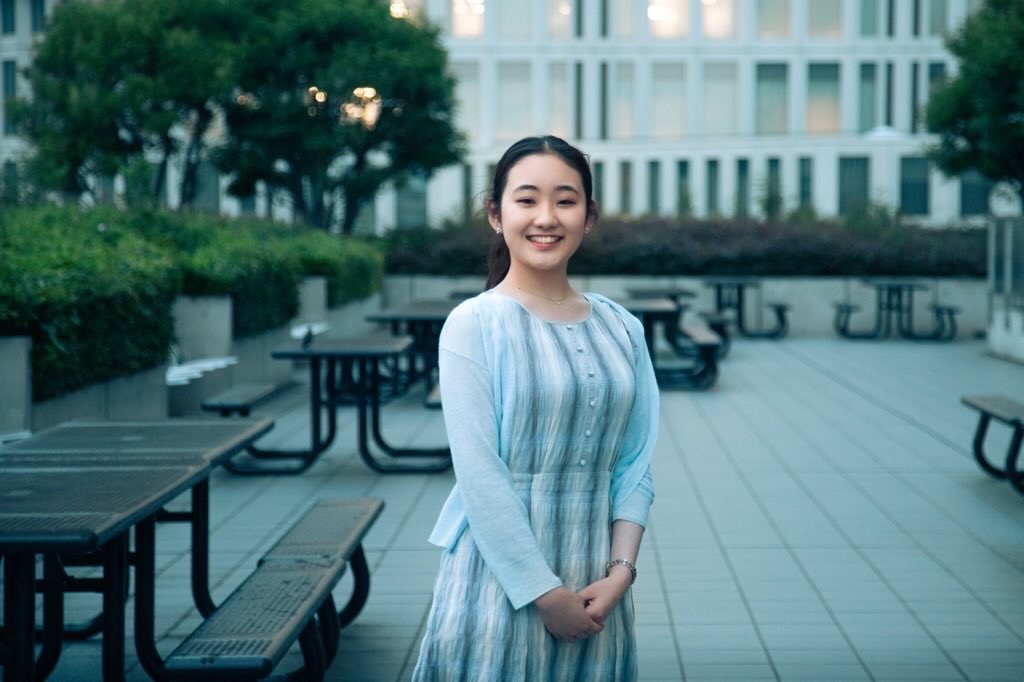
When Ayu Nishi, a senior at Sophia University in Tokyo, spoke with her friends on exchange about their holiday plans, they confided, “They were scared to travel home during breaks because they weren’t sure if they could come back. As someone who’s also far from home, I really understood that fear.”
Nishi says, “As a foreign student, hearing those stories [about ICE] definitely makes you feel more vulnerable even if you’ve done everything right.”
Despite Secretary of State Marco Rubio’s estimate that only 300 students were affected by the Trump administration’s crackdown on immigration, more than 1,800 students across the country have lost their F-1 or J-1 student visa, according to Inside Higher Ed.
“A lot of people are shifting away from the U.S.,” said Jimin Lee, a junior on exchange at the University of Hawai’i at Mānoa. “They’re looking into other English-speaking countries like Canada and the U.K.”
Nishi expressed that her interest in studying in the U.S. started with her passion for environmental challenges faced by island nations. “I wanted to study where I could experience language education in a truly multilingual environment,” something that aligned with her educational interests.
After exchange students received a university-wide email from the Chief Global Officer regarding immigration policy changes, Nishi realized “how unpredictable things can be, especially for international students.”
At the University of Hawai’i alone, there are approximately 1,700 international students enrolled, primarily split between the Mānoa and Kapiʻolani Community College campuses. However, of this group, only a few students have faced visa revocations this year, and none since April 8th, according to an open forum with UH President Wendy Hensel held on April 21.
“Less than five students have been affected, and I should say that of the five, two are no longer current students,” says UH President Hensel.
During the forum, UH President Hensel affirmed that even though “there has not been a clear indication of why,” student visa revocations have not been attributed to student engagement in protest of free speech-related activities, as far as they can tell.
UH continues to monitor for information regarding international exchange students through the Student and Exchange Visitor Information System, commonly referred to as SEVIS for short. The web-based system was established by the Department of Homeland Security to monitor the status of exchange visitors within the U.S.
In the past, SEVIS was how “we find out if somebody’s visa has been terminated,” says UH President Hensel. “In fact, in these cases, we found out before the student was notified.” As the University becomes aware of changes, UH President Hensel states the school will reach out to the student and begin a dialogue to address the needs of each student. This support can come in the form of identifying pro bono legal services to address the particular position of the student or other necessary services.
As of April 25, 2025, Insider Higher Ed has identified over 1,840 students and recent graduates from more than 280 colleges and universities who have reported a change in their SEVIS records. However, that doesn’t eliminate the harm already caused to exchange students, as the Director of Columbia Law School Immigrant Rights Center, Elora Mukherjee, asserts.
Students who have already elected to self-deport, halt their studies, work, etc., have done so based on communication from their institutions and the Trump administration, according to the Insider Higher Ed.
During the forum, UH President Hensel reassures the audience that individuals who have had their visa’s revoked, will not be taken “off our enrollment, agendas, or rosters… and we will work with each of these students to finish out or identify how we can support their academic studies during the pendency of the legal challenges that occur from that point.”
In this way, the University of Hawai’i continues to advocate for their student body, providing several comprehensive international student services and resources. UH President Hensel closes her presentation with a QR code for the audience to forward inquiries and concerns to continue with this dialogue in the next forum.
The future of international exchange students in the U.S. remains uncertain at this time. Chris Ordoñez, a third-year student at Leiden University, suggests, “It’s already visible that there has been a big decrease in tourism, so I expect that students will choose other countries for their exchange, to avoid all the trouble of going to the U.S.” Though he had considered going on an exchange with UCLA for a time, he has since held back on his choice for now.
Hosting exchange programs strengthens relations between nations, boosts economies, and diversifies educational environments through cross-cultural exchanges. When students like Sam Vivas, a junior at the University of Hawai’i at Mānoa, go out on exchange and return with their experiences, they actively play a role in enriching our community.
“Studying abroad has been so fun, and I have been able to obtain a good support system,” Vivas said. “I think it’s important to have these kinds of communities, because there’s a lot you can learn by simply living in a different place.”
She, like many other students, feels discouraged by the Trump administration’s immigration policy and resulting visa revocations. “I feel scared for the international students…I think this will make the U.S. a less desirable place to go on exchange, sentiments that are echoed throughout the international community I’ve met on exchange.”
Chris Ordoñez, a third-year student at Leiden University, agrees with those sentiments. From what he’s observed, “the U.S. might be the least pleasant country to live in, out of all western countries,” and he believes that other exchange students will look elsewhere.