In kitchens across Hawaiʻi, orders for Ilocos empanadas don’t begin at a counter. They begin in comment sections, direct messages, and weekly Facebook posts. What was once a staple of street markets in the northern Philippines is now selling out online within minutes, as families turn to digital platforms to share food from their homelands.
Platforms like Facebook Marketplace and Instagram have become the modern equivalent of street stalls, allowing vendors to reach hundreds of customers without a physical storefront. Each post functions like a menu board; each comment, a place in line.
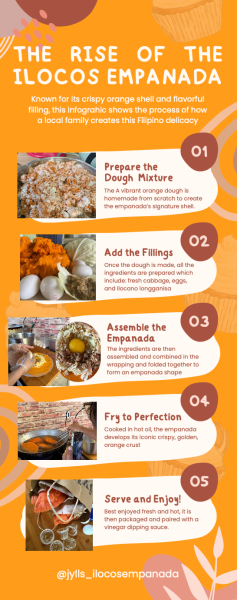
Long before pickup, the process begins in the kitchen. Dough is pressed and shaped by hand while cabbage sizzles beside longganisa cooking in oil, filling the room with a salty, smoky smell. Trays of bright orange empanadas line countertops as families work side by side, folding fillings into rice flour shells before frying each batch crisp.
The Ilocos empanada, named for the coastal provinces of Ilocos Norte and Ilocos Sur in the northern Philippines where it originated, has traveled far from the street markets where it was first sold. Driven by social media and a growing Filipino diaspora, it is now selling out of coast to coast home kitchens in the United States. From Hawaiʻi to Boston, many families are recreating the experience of an outdoor market one preorder at a time.
Kayie Ancheta runs the home-based business @jylls_ilocosempanada with her family and has become known locally for her Ilocos empanadas.
“It all started when my daughter constantly asked me to cook her empanadas from home,” she said.
What began as a pandemic hobby soon turned into something bigger. While living in San Diego, she brought homemade empanadas to her job at a biotech company, where coworkers quickly became customers.
“I never asked for payment,” she said. “But they insisted.”
After moving back to Hawaiʻi, the demand didn’t stop. Now operating through preorders, the family manages limited ingredients and time slots, often selling out before the day ends.
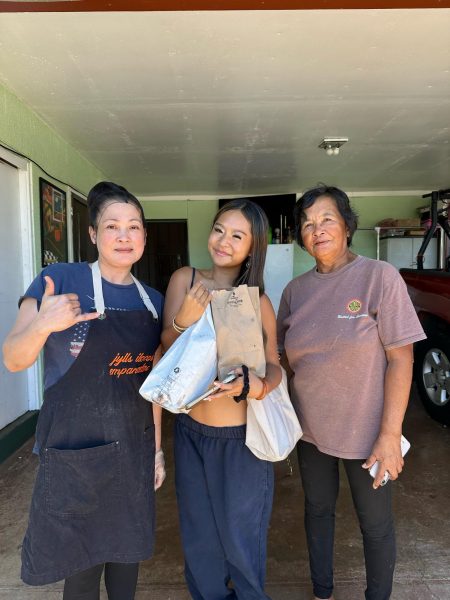
“I cook what is ordered,” she said. “It’s first come, first serve. Everyone loves it. They always say it’s different.”
That same demand can be seen across local pickup spots and community markets like the Aloha Stadium Swap Meet, where they also offer the popular empanada at a Filipino stand.
Another popular vendor, Alicia’s Empanadas, has built its reputation through a highly structured system. Orders are only accepted once a week on Wednesdays by phone, specifically from 7 p.m. to 9 p.m. Pickups are scheduled for later that weekend. The limited availability has created a sense of urgency, with customers planning their weeks around ordering windows.
On TikTok, creators like Nicky Ypil, also known as @nickkaaayy, have contributed to this popularity through viral videos and reviews.
“I’ve noticed a big increase in interest recently,” she said. “I think social media plays a huge role, platforms like TikTok make it easy for food to go viral, especially when it’s something visually appealing and unique. The bright orange color, the crispy texture, and the whole experience of eating it really catch people’s attention. Also, there’s been a growing interest in cultural foods and supporting small/local vendors, which helps push dishes like Ilocos empanadas into a wider spotlight.”
These clips have helped more people discover Ilocos empanadas, driving online demand, increasing orders for small home-based vendors, and helping transform it into a food trend.
“Ilocos empanadas are more than just food to me, they represent culture, comfort, and connection,” she said. “Being able to share dishes like this through my content feels like a way of celebrating where the culture comes from while also introducing it to people who may have never experienced it before. It’s something that brings people together, and I love being able to highlight that.”
Thanks to her videos, the impact has extended even beyond Hawaiʻi as many were craving it, inspiring viewers to seek out or recreate the dish in their own communities.
Demand Spreads Beyond Hawaiʻi
In Boston, where Filipino food is still finding its place in the city, home cooks have started making Ilocos empanadas on their own, with some even selling them within local communities.
Janz Van from @Janzkitchen in Boston said, “I was a pastry chef in the Philippines for four years before I wanted to start selling it in the states.”
As interest keeps growing, certain ingredients have even become harder to get, with specialty stores sometimes running out of basics like annatto powder and longganisa.
One buyer, Tin Deo, said he placed an order in early April but didn’t receive it until late May because Van is fully booked and is the only one in Boston making and selling Ilocos empanadas at this time. Even with the long wait time, he said it has become part of the experience, not something that turns him away.
“It’s not just food,” he said. “It’s the whole process. It’s worth it.”
He also said that the anticipation actually makes the first bite better.
“By the time I get it, I’ve been thinking about it for weeks,” he said. “It kind of makes it taste even more special.”
For vendors like Ancheta, making Ilocos empanadas takes hours, from early mornings into late evenings to keep up with the growing preorder lists. But for many families, the process is about more than fulfilling orders. It is about recreating a familiar tradition from home, where cooking together is part of everyday life and each empanada carries that memory forward.