
Despite challenges, South Korea’s mandatory disability employment system has expanded job opportunities.
According to Youngae Kim, associate professor department of social welfare at Korea National Open University, the system is designed to support individuals with disabilities, as access to jobs has improved while obstacles remain about inclusivity, equity, and discrimination.
“Hiring persons with disabilities is no longer understood as a matter of charity or goodwill,” said Kim. “It is increasingly seen as a social responsibility.”
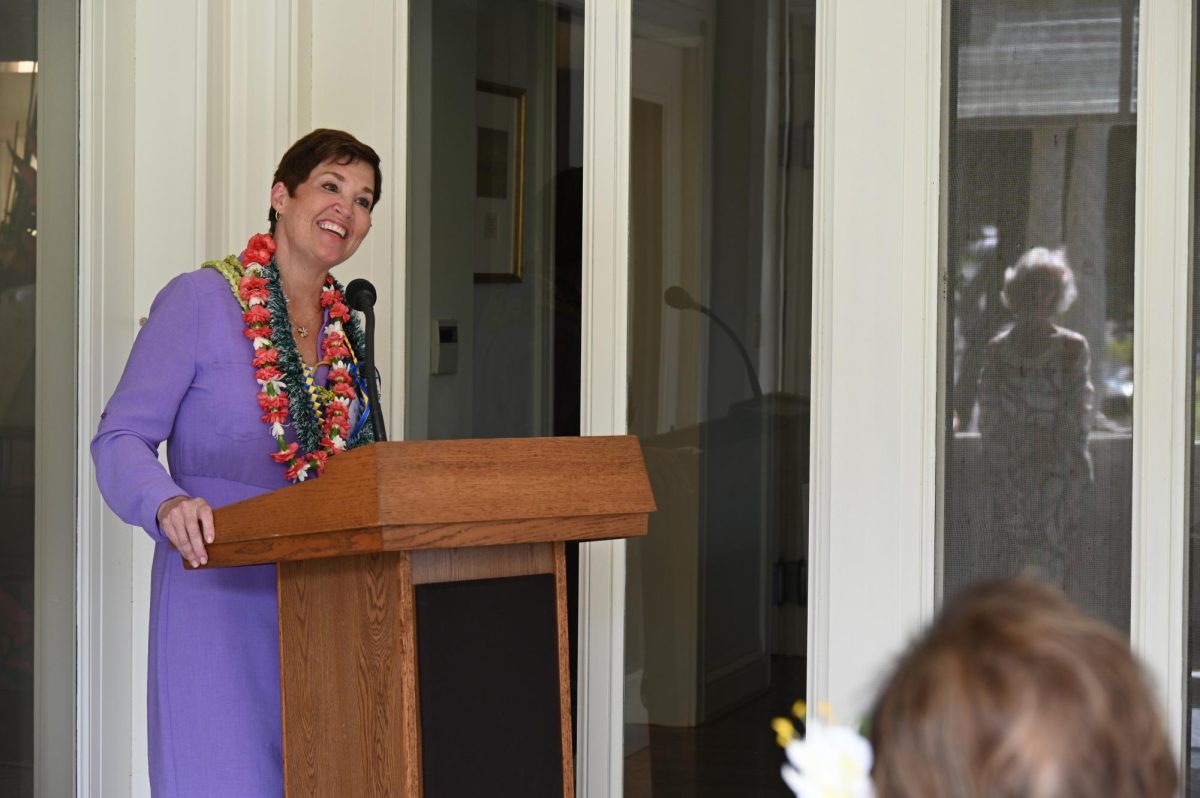
In partnership with the Thompson School of Social Work & Public Health’s Department of Social Work’s Global Social Work Speaker Series, Dr. Kim addressed the comparison in policies in the U.S. and in South Korea, noting it is worth studying.
The system in South Korea has helped expand employment support programs and institutional infrastructure. This is a system built around obligation and reward. It has become one of the core institutions of the disability system in Korea.
“When we evaluate the Korean system, we need to look beyond numerical growth and ask whether employment is truly inclusive and meaningful,” said Kim.
Under the mandatory employment system, the disability employment rate in 2024 was 3.21%. This is the highest percentage ever recorded in South Korea.
An individual with disabilities may be hired, but without accommodation, matching, job coaching, or retention support, the job may be meaningless. To many people with significant disabilities, employment is not simply a matter of matching someone to an existing job.
Under the Korean system, employers are expected to not only increase hiring, but also build a database that supports hiring.
“I want to emphasize the Korean system is not a penalty system,” said Dr. Kim. “They sometimes assume it is a punishment for the employer.”
The system is complex. It places responsibility on employers to meet the target, combining pressure with support. The policy tries to connect employer obligation with public support by implementing laws about mandatory hiring.
“So why did Korea adopt a quota based system? The short answer was that voluntary hiring was not enough,” said Kim.
Not all companies, both private and public, have responded to the quota in the same way. For example, the company 7-Eleven focuses on employing women with disabilities and severe disabilities. Starbucks has employed baristas with disabilities since 1927 and emphasizes listening to feedback from employees with disabilities.
The quality of implementation still depends greatly on organizational attitude and practice.
Kim said the quality can improve while quantity remains uneven. She said that employment rates should be carefully interpreted. The numbers often don’t account for the lack of promotion opportunities, individuals with severe disabilities and older persons.
Kim said the Korean system is not about requiring employers to hire – it tries to build the conditions that make employment more possible and sustainable.
Correction: This article has been updated to correct the name of the partner institution for the talk. The correct partner was the Thompson School of Social Work & Public Health’s Department of Social Work.