

State Sen. Jarrett Keohokalole is no stranger to struggling with the high cost of living in Hawai‘i.
After college, he moved in with his wife’s family to save on costs, and watched family members grapple with rising rental prices. Keohokalole says his genealogy traces roots back 500 years to the area now known as Waikalua Road, with 40 members of his generation living there at one point. Today, that number has dwindled.
“There are seven of us left in the neighborhood—the rest have moved away,” said Keohokalole, who represents Kāne‘ohe and Kailua under Senate District 24.
Affordability, one of the main issues that sparked Keohokalole’s involvement in politics, was the very same issue that politically active youth in Hawai‘i primarily focused on during a student-led forum at UH Mānoa on Feb. 26
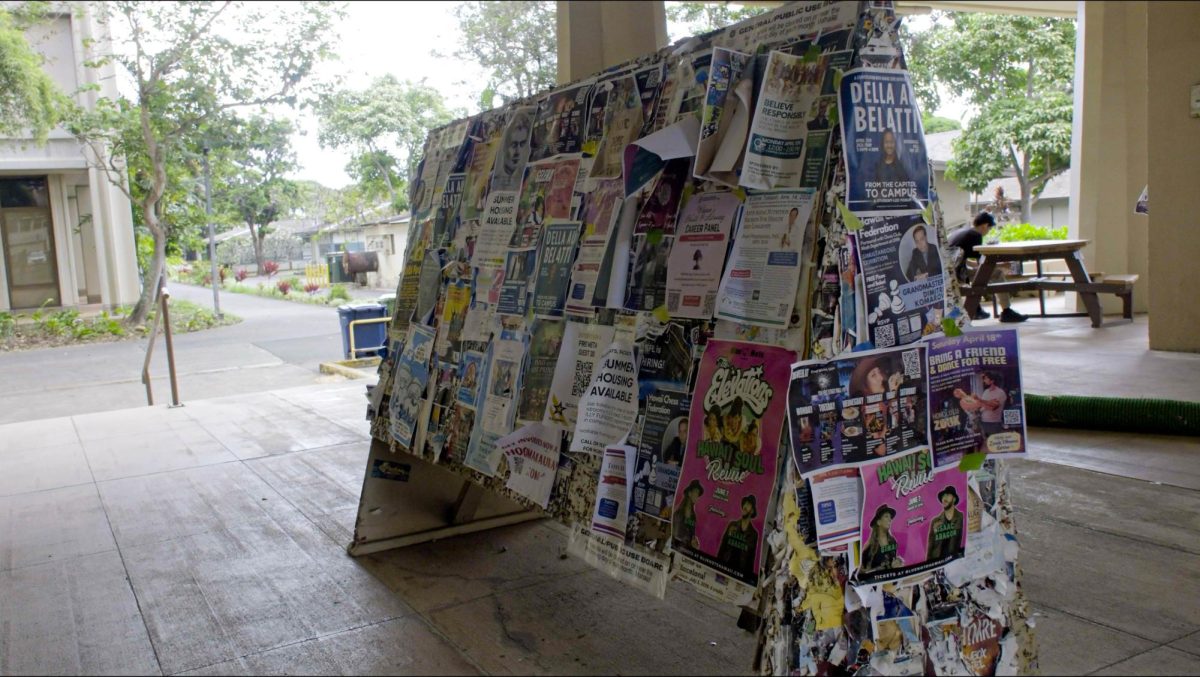
The hour-long Q&A session with the state senator brought politics, as the promotional flyer said, “From the Capitol to Campus.”
Audience members asked an array of questions, but the majority tied back to their anxieties about the future of affordability in a state with the second-highest cost of living in the country.
A few questions included:
“Housing isn’t as affordable as in a lot of other states—are there any plans to make improvements to that?”
“What we need is a unified, proactive message calling for a higher capital gains tax, higher property taxes—which might not necessarily be popular, but are what we need if we want to address these issues. Are these things you can support and do you think you can create a more unified progressive caucus in the legislature?”
“A big problem in Hawai‘i is food insecurity for people having to rely so much on expensive imports. We have had a historic and continuing ahupua‘a system that can be cultivated, and when cultivated properly, can hopefully solve a lot of these problems. Would there be anything that you would do on a federal level to advocate for these organizations to receive more funding and cut the yellow tape, allowing them to expand?”
A political force to be reckoned with
Keohokalole’s answers covered three things: action he’s already taken during time in office to address the issues mentioned, challenges from operating within the state and federal government, and most importantly, what he plans to do next.
As the chair of the Commerce and Consumer Protection Committee in the Hawai‘i State Senate, tackling affordability is right in Keohokalole’s wheelhouse.
The state senator is also an assistant majority whip, and serves as a member of the Hawaiian Affairs Committee, Transportation, Culture and the Arts Committee, and is a co-chair of the Native Hawaiian Caucus.
Keohokalole stated that in general, he is a strong supporter of progressive tax policy in order to make life easier for the average Hawai‘i resident rather than billionaires and foreign investors. He plans to continue advancing policies such as assisting local business owners, holding the military accountable, supporting sustainable agriculture, and prioritizing Hawaiian Home Lands.
The state senator also highlighted two measures related to affordability that he was proud of accomplishing.
With Lahaina wildfire survivors in mind, Keohokalole introduced SB 2919 in 2024 to impose heavy restrictions on short-term vacation rentals. Signed into law as Act 017, this legislation gave counties in Hawai‘i the authority to regulate, tax, and even phase-out short-term rentals through zoning.
While part of the House of Representative in 2018, Keohokalole was one of the introducers and advocates for HB 2501, which established the Hawaii Community College Promise Program when it was signed into law as Act 014. The program provides financial assistance for community college students.
Overall, Keohokalole gave long, detailed responses, but sidestepped some parts of multi-pronged questions. For example, the state senator was highly critical of Trump, but didn’t directly respond to an inquiry of whether he would vote for impeachment if given the chance.
Ending the forum with a call to action, Keohokalole encouraged attendees to be a part of the democratic process, regardless of whether or not they aligned with his views.
“What I want to stress—and this is what I realized when I was in these seats as an undergrad—is that I really wanted change to happen, and it wasn’t happening at the speed that I wanted it to. I just stopped waiting for somebody else to do it, and I got involved myself,” said Keohokalole.
Despite the tedious process of government, Keohokalole is in it for the long run.
“It’s still a slog, and we still go two steps forward, one step back, and it’s frustrating, but I love being a part of it. I love having conversations with you guys and I love being a part of the actual change,” said Keohokalole in his closing remarks to the audience.
Future generations of voters
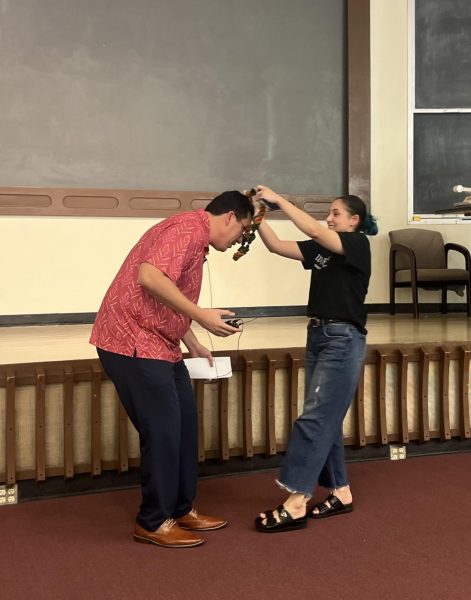
UH Mānoa political science PhD student and lecturer Richard Murphy appreciated the opportunity to put one of his primary concerns, skyrocketing utility costs, on Keohokalole’s radar.
“Politicians need to be talking to and addressing constituents directly,” Murphy said. “Whether it’s community events that are not on campus, or whether they are campus events, I think actually talking to the constituency is important.”
The majority of forum attendees represented young, politically active students and community members. But in Hawai‘i, they are outliers. The number of registered voters ages 65 and older was nearly double the number of registered voters ages 29 and younger, according to the most recent age demographic breakdown by the State of Hawai‘i Office of Elections for the 2020 general election.
In his campaign for Hawai‘i’s first Congressional District, Keohokalole and his team aim to energize young voters. The newly created Instagram account, @genzforjarrett, is just one way they’re doing so. But Murphy points out that social media alone isn’t enough.
“I think it’s vitally important even for people who are in the Gen Z population, who are on social media and do have that engagement to have a face-to-face interaction with them. I think that brings back our humanity a little bit more,” said Murphy.
The UHM College Democrats are planning to host similar events, including an upcoming forum with Hawai‘i State Rep. Della Au Belatti, who is running for the same seat as Keohokalole.
Belatti and Keohokalole are challenging well-established incumbent Ed Case, who notably did not respond to a request to join for an on-campus event at the time of the forum on Feb 26.
“Politics is for everybody because it affects everybody,” said Fiona Pearse, director of operations for the UHM College Democrats, who organized the forum. “By going to an event like this where you just meet your senator, meet your representative, and know who they are, you feel more connected to politics, and that will ultimately turn into a more connected society.”
Amelia Sofos, president of the College Democrats of Hawaiʻi and the UHM College Democrats, wants this event to inspire her peers.
“I’m hopeful that it will incentivize students to dream big for themselves to see where they can end up in the future,” said Sofos. “But also to see that UH Mānoa offers all these possibilities and all of these connections—it’s really important to utilize them.”