


The 2026 adaptation of “Wuthering Heights,” directed by Emerald Fennel, gives the audience what they want: Jacob Elordi and Margot Robbie grinding in gaudy Victorian era attire, cinematic shots of the heights transporting you to the gloomy Yorkshire Moors, and a reason to get lost in a tumultuous relationship more heart-wrenching than your last situationship. After watching the film, I believe there’s enough creative differences to claim the movie was more “Wuthering Heights inspired,” than a true adaptation of Emily Brontë’s classic novel. The movie felt as if they were grasping at strings, trying to tie up loose context integral to the plot.
Emily Brontë’s “Wuthering Heights” is a story about love as rebellion, contending against a restrictive social hierarchy that demonstrates a struggle between love and social ambition. To me, the rebellion was weak; all complex themes were scrapped for more sensual scenes. How can a book so nuanced be converted to a movie so one dimensional?
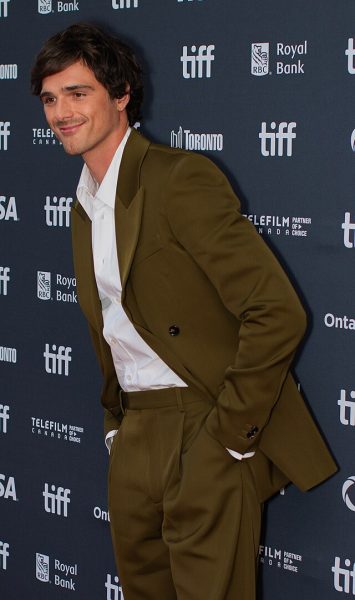
In the novel, orphaned Heathcliff is found and taken in by Mr. Earnshaw in a major port city connected to the Atlantic slave trade. Under his care, Heathcliff is treated as the favorite of Earnshaw’s two children, Catherine and Henley. After Mr. Earnshaw’s death, Heathcliff becomes a servant and suffers verbal and physical abuse by Henley, which leads him in search of a way out. Through racist narration, he is described as “a dark-skinned gypsy in aspect, in dress and manners a gentleman,” emphasizing how his racial ambiguity displaces him from the opportune lifestyle he is ushered into. Within the archaic context of the novel, Emily Brontë uses this detail to highlight the social barriers that divide Catherine and Heathcliff. Nelly’s narrative is quick to dehumanize him, often pitting him against imagery of a sublime dark energy, “incarnate goblin” that adheres to his reputation of being sinister. In the movie, Heathcliff faces verbal and physical abuse, but the reason why is planted on Jacob Elordi’s rugged mug. Other than his unconventional upbringing, the reason to discriminate against Jacob Elordi’s Heathcliff becomes more muddled upon his return to the Heights.
Catherine’s representation holds truer to the source. Margot Robbie revitalizes a free-spirited, unchecked, material girl who turns self-destructive when things go awry. To emphasize Catherine’s self-victimization, Fennel uses the symbolism of Cathy’s skin-print wallpaper and personal doll in Isabella’s house to convey Cathy’s self imprisonment by conforming to societal expectations. In a heat of passion, hindered by personal torment, she explains, “He’s more myself than I am. Whatever our souls are made of, his and mine are the same,” showing how she mistakes Heathcliff’s ostracization for freedom from societal expectations. Influenced to pick stability over passion, the film focuses on Catherine’s vindication over the pressure to perform successfully in high society.
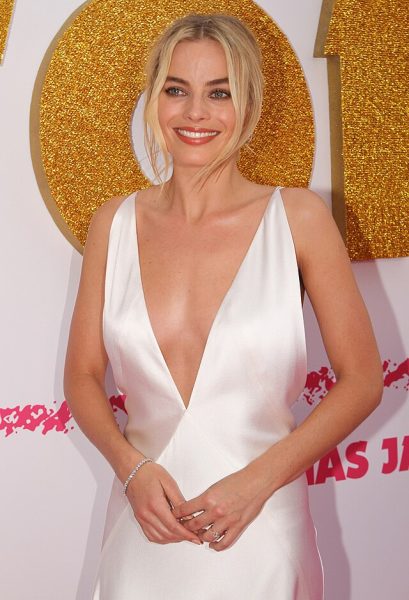
Although her character is more accurate, societal pressure isn’t accredited enough for her hasty decision making in the storyline. The expectation for women during this time is to marry the most economically viable suitor, the main catalyst for Cathy and Heathcliff’s tragic love.
It’s almost the end, and the audience holds their breath as Jacob Elordi races across the moors to visit his fading star-crossed lover. I anticipated a heart-wrenching reunion between the couple, where Heathcliff says, “You teach me how cruel you’ve been, cruel and false. Why did you despise me? Why did you betray your own heart, Cathy…What cause misery, and degradation, and death, and nothing that God or Satan could inflict would have parted us, you, of your own will, did it?” In the novel, all the passion within the burnt letters lost to the fire is restated in one vulnerable moment. Their final exchange shows how Catherine and Heathcliffs’ rebellious love turns into self-destruction by adhering to societal expectations.
I was sorely mistaken. The final scenes end with Heathcliff discovering his long-gone girl, Cathy’s body already cold. The sense of rebellion within their love is lost with Heathcliff’s hope that Cathy will reawaken. How could an essential scene miss the cut? The entire message of this book is subverted to focus on Victorian period opulence and indulgent eroticism.
As a stand-alone film, Wuthering Heights is a good cheesy blockbuster with colorful cinematography and a star-studded cast. It’s loosely based on the original novel, so if you watched Wuthering Heights for the plot, I suggest you go back and read the book.





Shreeya Shrestha • Mar 14, 2026 at 4:09 pm
I love your writing style! Great points were made. Cant wait to read more of your work!
reagan glynn • Mar 10, 2026 at 10:39 am
Completely agree with everything you said! Fantastic article!