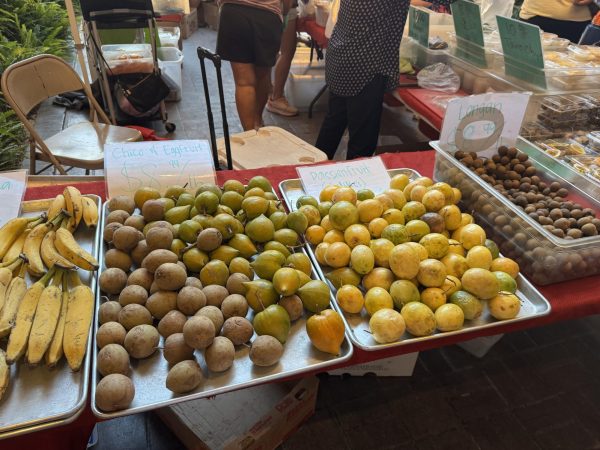


Brightly colored produce, fresh bread, and locally made goods fill the shelves at Ho‘ili‘ili Farmers Market, showcasing food grown and produced across Hawaiʻi. Shoppers linger between the stalls, looking over fresh food items and stopping to taste free samples, with vendors explaining how their products are made and encouraging them to support local farms.
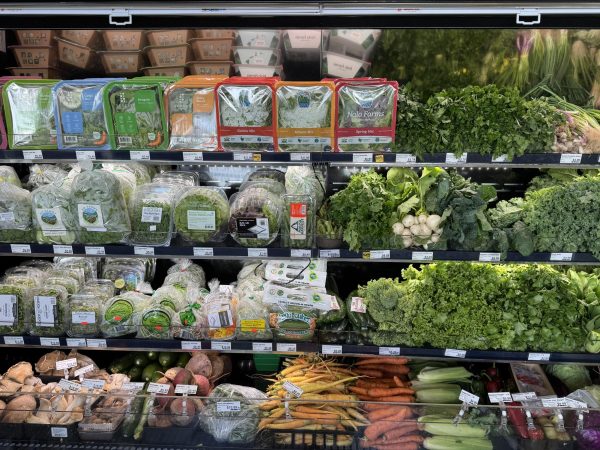
What shoppers don’t immediately see is the growing challenge behind those shelves: rising costs making it harder for markets like this to keep local food affordable and accessible.
As food prices continue to rise across the state, Hawaiʻi’s farmers markets are feeling the pressure from both ends. Heavily dependent on imported food, the islands face higher transportation and production costs that trickle down to small farmers and vendors. Markets are working to support local producers and serve their communities, but inflation, supply challenges, and limited inventory are forcing difficult decisions about pricing—showing a larger struggle over food affordability and security in Hawaiʻi.
Buying groceries has become more stressful than before. What used to be a quick stop at the store now feels like a series of decisions about what to buy, what to skip, and how long certain items need to last.
Rising food prices have made affordability a concern for many residents, especially when it comes to fresh fruits and vegetables.
According to the Bureau of Labor Statistics, grocery prices in Honolulu increased by 5.3% by March of 2025 compared to the same month the year before. Fruits and vegetables went up even higher, to 6.4%. Although the recent data from September 2025 show the rate slowing to 3.6%, food in Hawaiʻi remains expensive. The effects of inflation are still very present in everyday life and still being felt by people across the state.
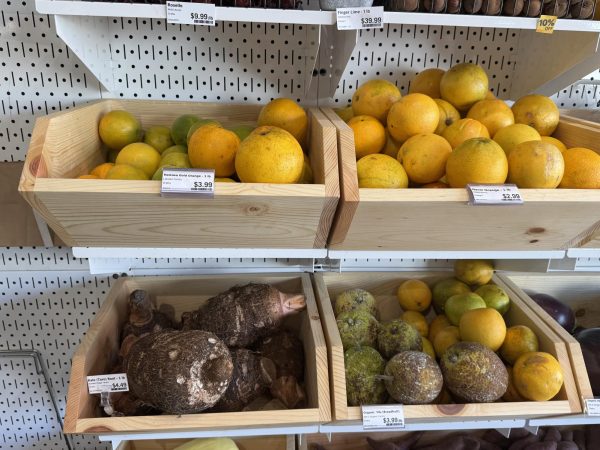
These rising costs are happening along with an already serious issue: food insecurity. Food insecurity means the lack of access to enough food for a healthy life. This includes being unable to afford a balanced diet or, worse, skipping meals and going entire days without eating due to limited resources. Data from the Hawaiʻi Food Bank shows that over the past year, 32% of Hawaiʻi households, which is equivalent to about 463,000 individuals, were food insecure.
While grocery prices and food insecurity numbers show the challenges that Hawaiʻi residents face, local farmers are important in keeping food accessible.
According to NBC News, about 90% of Hawaiʻi’s food is imported, making the islands extremely vulnerable to supply disruptions. State researchers have found that an island needs to grow at least 50% of its staple crops like kalo, ‘ulu (breadfruit), and ‘uala (sweet potato) to be self-sufficient in the event of a disaster.
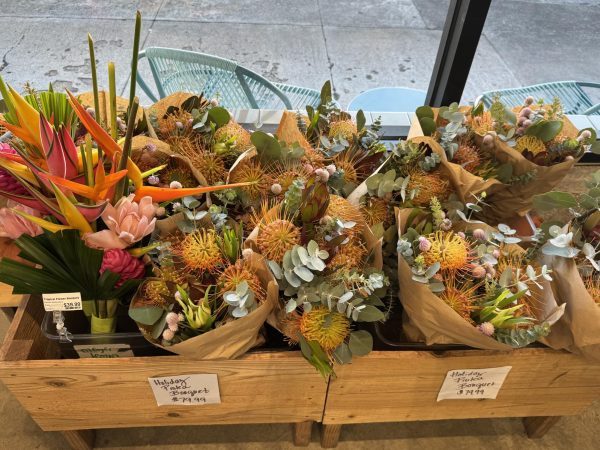
Local farmers are important for providing these staples, and they also help reduce food insecurity by supplying produce to food banks and schools.
At the Ho‘ili‘ili Farmers Market, staff member Kayla Rose explained how these markets serve as a bridge between local farmers and residents, while also showing the challenges small farmers face in an economy dominated by imports and rising costs. She said price increases are sometimes unavoidable.
“We need to increase the prices a little bit to meet the demands of the economy,” she said.
Because Hawaiʻi relies heavily on imported food, local farmers face higher costs for things like supplies, transportation, and production. These costs eventually get passed down to markets and, in turn, to customers.
Ho‘ili‘ili focuses entirely on local production, working with small farmers and vendors across the state. Many of these farmers are unable to sell their products in large grocery stores because they do not produce enough volume. For them, farmers markets provide one of the few opportunities to reach customers.
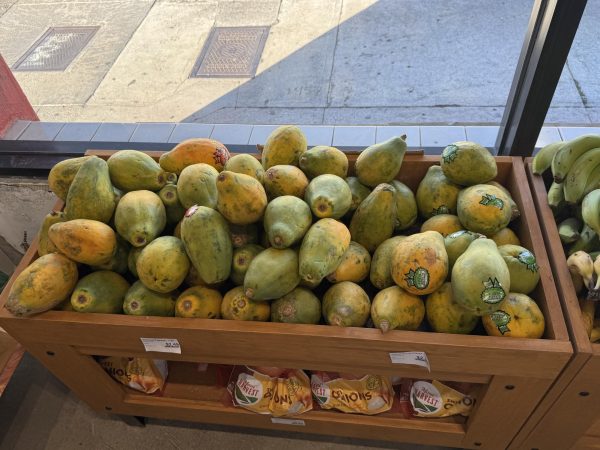
“What we’re doing here in Ho‘ili‘ili is serving the community to counter the mainstream. Everything in the store is locally produced from farmers across the state, the little farmers who can’t get their items into the larger stores because they don’t produce enough,” Rose explained.
However, supporting small farmers comes with challenges. Local production often corresponds to lower inventory, which raises the costs.
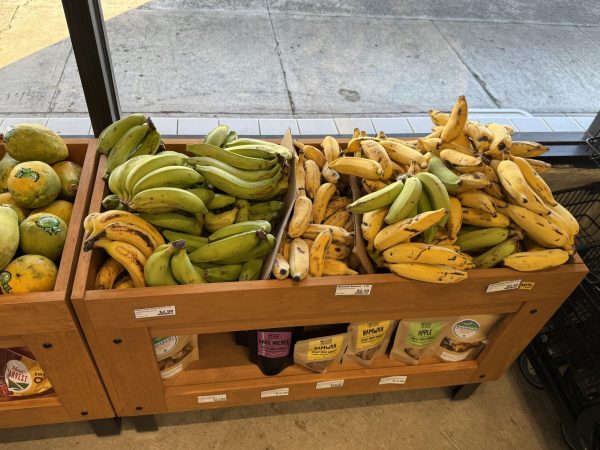
Rose says that logistics also has a role in pricing, including weather conditions, transportation, and the success of a farmer’s harvest.
(Maria Ysabelle Ganal)
“The farmer’s gonna charge us whatever they charge us, and we respond to that,” Rose said. “Did they have a good year? Did it rain? There’s a whole bunch of considerations.”
In spite of these challenges, Ho‘ili‘ili makes an effort to keep food accessible. Staff regularly compare prices with nearby supermarkets and try to stay within a similar range. The market also accepts EBT and SNAP, allowing people who rely on food assistance to buy fresh, local produce and staples like poi.
“One of our primary goals is to make food accessible to everybody, not only to people who can afford it,” Rose said.
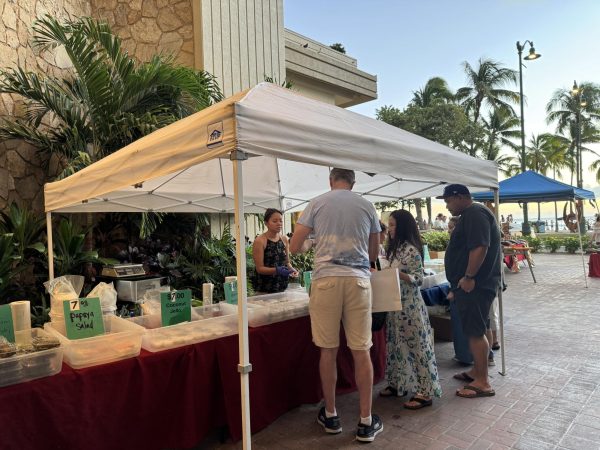
The struggles are also felt at the Waikīkī Farmers Market. Kayla Khounsourath, a vendor of fresh produce who sources their products from Waimānalo and Kahuku, said that they recently raised prices.
“It’s very expensive right now, so we try to just sell what we can,” Khounsourath explained. “It’s also kind of hard because of inflation, and we are trying to negotiate with customers too, because they are kind of stingy in a way. We just actually made our prices more expensive; it’s a dollar more, but it’s been hard nowadays. Buying the fruits, like in general, got more expensive, so we made our prices more expensive.”
For markets like Ho’ili’ili, the goal goes beyond sales or profit. It comes down to access. Rose said that their mission remains at the center of their work.
“The premise is that everybody has access to good food,” she said.