
This story was originally completed May 12.
As floodwaters swept across parts of O‘ahu during the March 2026 Kona low storm, animal rescue groups worked to reach stranded animals trapped in some of the island’s hardest-hit communities.
“We tried to give them food, we also tried to catch them and just get them any kind of care they needed,” said Animal Protection Officer Christopher Casey. “After we rescued those animals, it was more of a humanitarian approach. Helping people in need with food and supplies.”
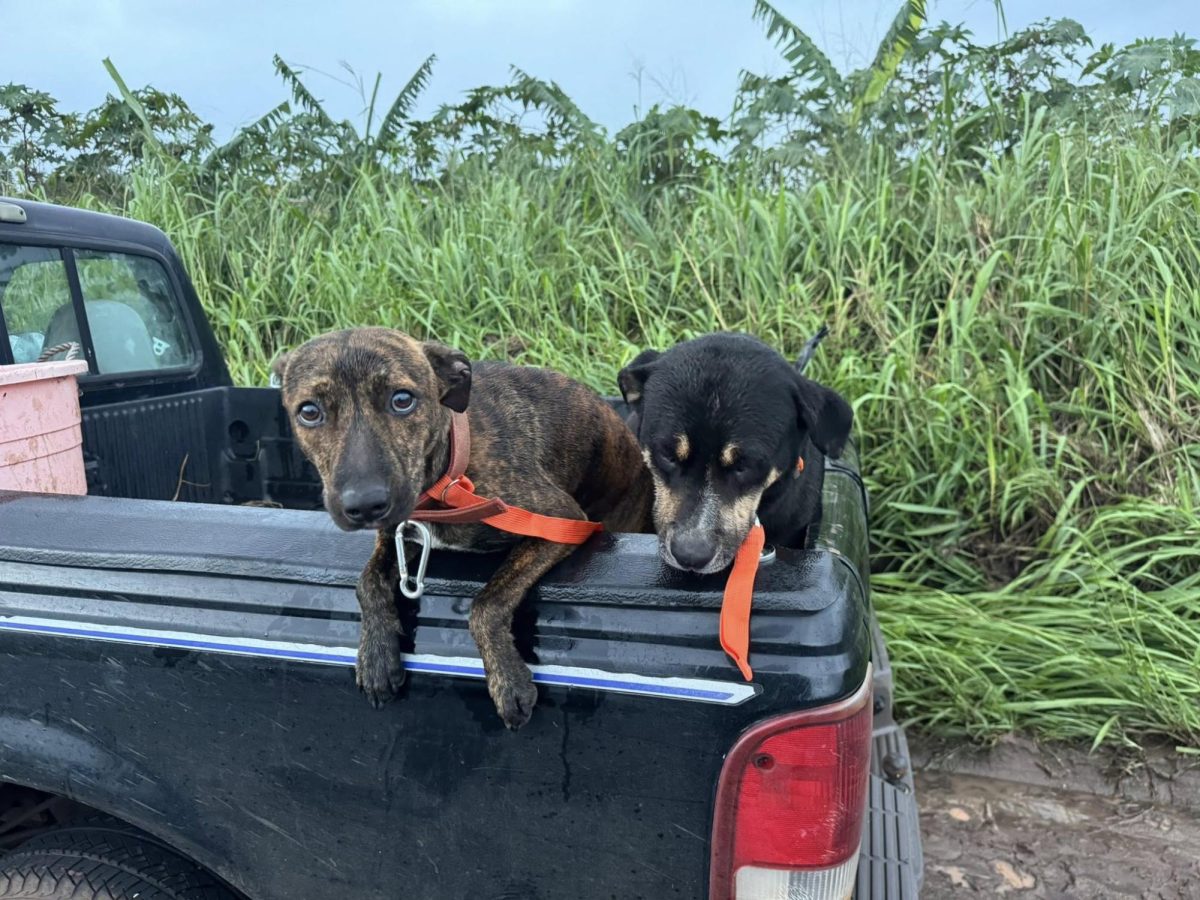
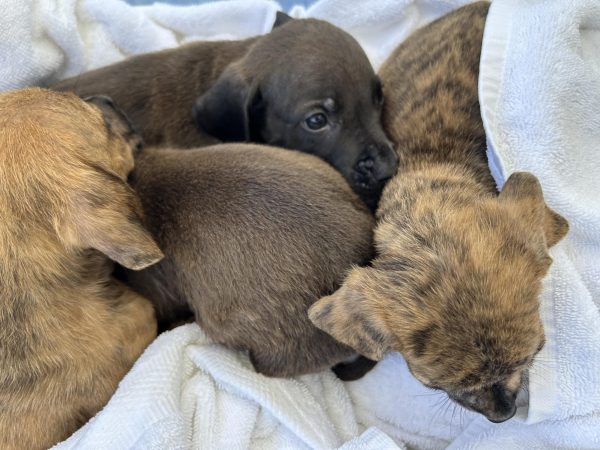
Casey and his team rescued five cats and one dog on the first day of their response. The day after, he and his team returned to the farm, where animals had been displaced, and rescued four stranded puppies whose mother had died during the flood.
Multiple rescue organizations participated in flood rescue response efforts across the North Shore. While independent rescue groups entered affected areas during the storm, the Hawaiian Humane Society joined operations after receiving authorization to access flood zones, according to the organization.
Weeks after the storm, animal rescue groups said the biggest challenge is no longer rescue but recovery. Already overwhelmed organizations face an ongoing surge in animals, a shortage of foster homes, and continued demand for food and supplies. For the hundreds of stray and feral animals living in affected neighborhoods, the crisis did not end when the waters receded.
The strain is even visible at the University of Hawaiʻi at Mānoa, where cat colonies live across campus.
“Most caregivers are just individuals,” said DJ Sakata, foster and adoptions coordinator of Hawaii Cat Foundation. “They see a few cats, start feeding them, and then more cats show up.”
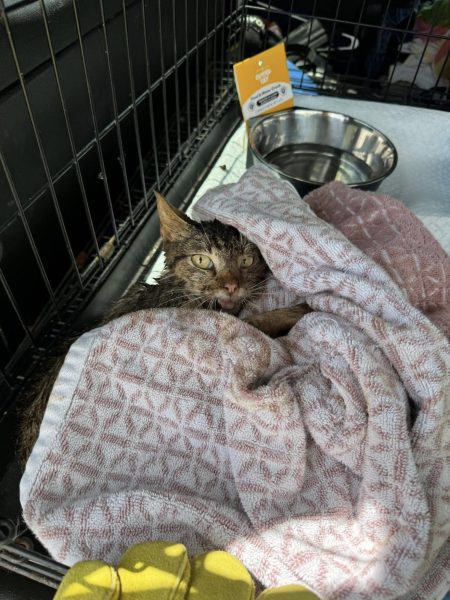
Following the storms, Sakata said the organization has struggled to keep up with the growing number of rescued animals, many of them too young to be adopted.
“We are full to the eyebrows with kittens,” said Sakata. “That’s our main problem right now, foster homes.”
Limited veterinary access also continues to challenge rescue efforts, as organizations compete for a small number of available appointments.
Those same challenges are affecting day-to-day care for the animals across the island.
Kaleigh Morton, program coordinator for Cat Friends, a nonprofit organization that focuses on trap-neuter-return programs for community cats on Oʻahu, said volunteers have struggled to keep up with feeding and trapping efforts as road closures, displacement and limited resources continue to affect animals and the people who care for them.
“The population is probably going to increase after this because a lot of people can’t get to different locations,” said Morton.
Organizations have also seen an increase in calls from residents seeking help with various needs, such as food and veterinary assistance.
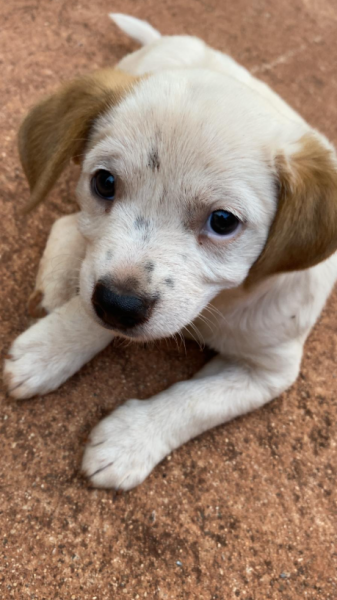
Morton said Cat Friends is often unable to meet those requests due to limited resources and instead refers residents to other organizations.
The strain is also being felt by other rescue groups across the island.
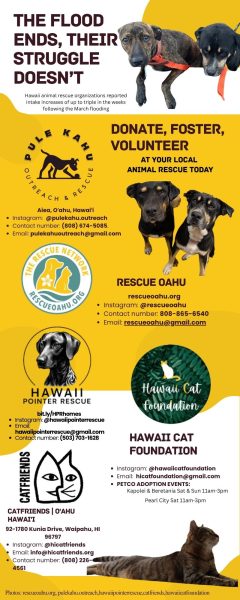
Carolynn Duncan, founder of Hawaii Pointer Rescue, said the organization is handling nearly triple its usual caseload following the flooding.
“We’re definitely tired, and we’re overloaded,” said Duncan. “We usually have five to eight cases at a time, and right now we have 17.”
She said many of those cases came directly from flood-affected areas, adding to the organization’s ongoing workload of medical care, food distribution, and rehoming animals.
“We were already stretched thin, and now we’re at our superhuman max,” she said.
Pule Kahu Outreach & Rescue, a nonprofit organization that focuses on large breeds and major medical and behavioral cases, is also caring for more than 30 dogs from flood rescue and evacuation efforts, many of which are still looking for their forever homes.
In a written statement, founder Rain Barbour said donations of dog food, blankets, beds, and other supplies are still needed as recovery efforts continue.
Beth Kolakowski of Rescue Oahu said the nonprofit organization also needs support to rebuild pet enclosures and maintain ongoing food supplies.
As rescue operations slowed, organizations across the state shifted their focus toward recovery and long-term access to care.
“Our focus now is on how do we make sure that the community has access to what they need,” said Brandy Shimabukuro, director of communications and marketing at the Hawaiian Humane Society. “Is it pet food and supplies? Is it access to spay and neuter? Is it access to veterinary care?”
Shimabukuro said the organization has also worked with pet owners who were displaced or unable to care for their animals, allowing families time to recover and find pet-friendly housing.
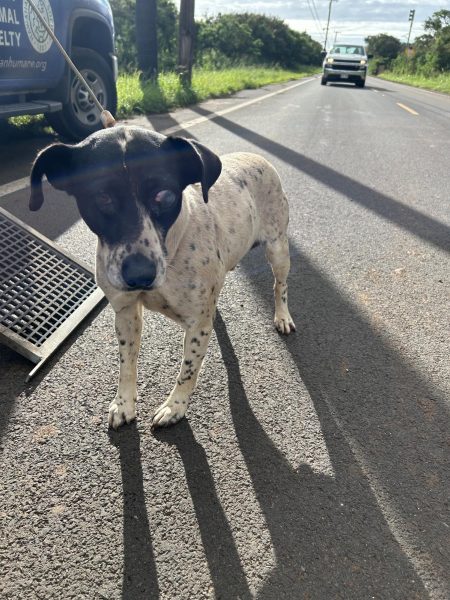
Even as recovery efforts continue, access to care remains uneven across Oʻahu. In a written statement, the Hawaiian Humane Society also noted difficulties that pet owners face in accessing care or support for their animals, even outside of an active emergency.
Shimabukuro said geography is one of the most persistent gaps.
The organization expanded services to West and Central Oʻahu when the Kosasa Family Campus at Hoʻopili opened in 2023, but the site remains about 30 minutes away from the North Shore, which is one of the areas most impacted by the flooding.
For families without reliable transportation, that distance makes getting help nearly impossible.
On May 9, Aloha Animal Outreach, together with North Shore Veterinary Clinic, hosted a free clinic for residents affected by the storms.
According to Barbour, more than 50 dogs received spay and neuter services and basic veterinary care during the event. The clinic also provided treatment for flood rescue animals and pets belonging to residents from farms, homeless encampments, and other affected communities.
Rescuers also encountered challenges that were harder to measure during the flooding itself.
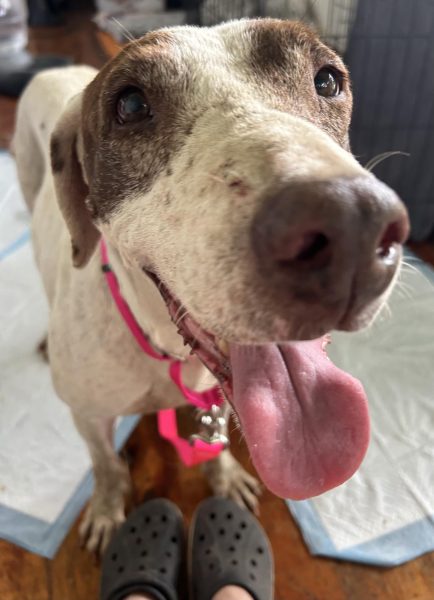
Shimabukuro said some residents hesitated to leave their homes with their animals despite evacuation risks because of concerns regarding immigration status and mistrust of authorities.
“It’s something our sector needs to take seriously,” said Shimabukuro. “People cannot access help they don’t feel safe asking for.”
Residents who regularly care for stray animals also continue to see effects.
“They show up,” said Cornelia Wujec, a Waipahu resident who feeds the stray cats. “Poor things, I feel sorry for them. They hide wherever they can.”
Despite the heavy rain, stray cats continued to appear, highlighting the ongoing presence of free-roaming animals even after the storms.
Shimabukuro said recent disasters have also reshaped the organization’s approach to preparedness, including strengthening partnerships with public health agencies and community groups.
“Disaster preparedness isn’t a checklist you complete once,” she said. “It’s something you build over time, and it requires the whole community.”