This article is from Dec. 15, 2025.
Teo Lorenzo sat at his computer showing examples of the humpback whale vocalizations he was trying to decode.
“You see this structure here? It seems to happen a lot of times before a feeding call,” Lorenzo described, showing a series of repeating lines in the audio track on his computer.
He proceeded to play the call, a whompf-whompf-whompf sound he has named the “purr series.”
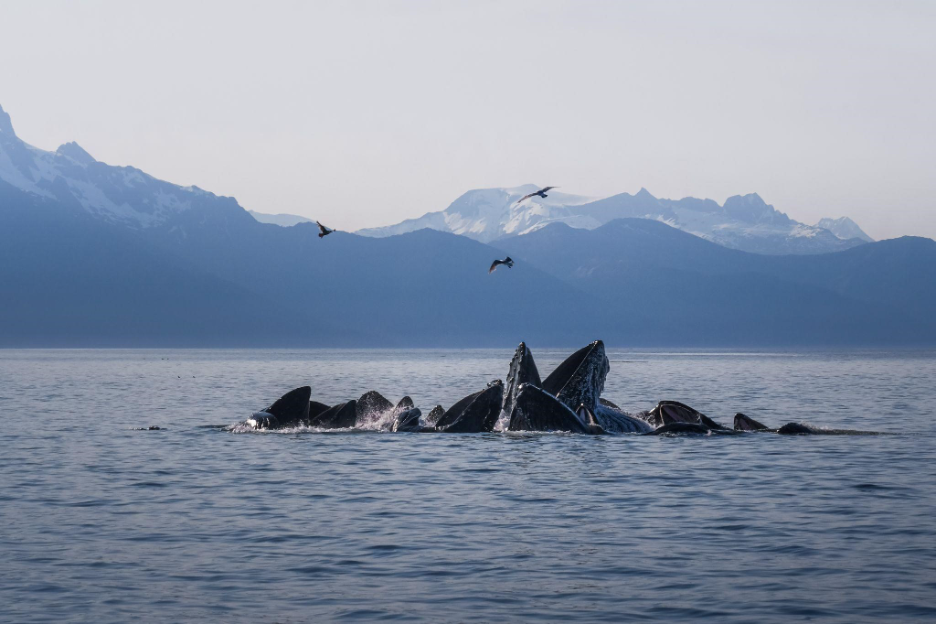
The purr sound precedes the feeding call used in the humpbacks’ unique bubble-netting behavior. In conjunction with using their bodies and bubbles to trap fish in a bottleneck shape, humpbacks use a feeding call that annoys fish and helps school them together.
How the whales decide which whales are going to play what role in the bubble feeding is currently a mystery to scientists. Lorenzo is trying to decode the calls to solve this mystery.
“Who does the feeding call? Which whale, why, when, how loud, nobody knows,” said Lorenzo.
Lorenzo is a 23-year-old undergraduate from a small town in Spain. He is pursuing his Bachelor of Science in Biology at the University of Hawai’i at Mānoa.
Lorenzo is undertaking a research project – attempting to decode humpback whale sounds by matching sound patterns with behavior. His research has not only taught him about whales, but has also given him clarity about his future career.
The project is for Lorenzo’s Marine Option Program Certificate capstone project and is the culmination of his degree. He does not have his results yet, but his project will be presented at the Undergraduate Research Showcase on Dec. 12.
The project was inspired by an internship Lorenzo did last year. Lorenzo’s job was to analyze humpback footage for Martin Van Aswegen, a postdoctoral researcher at UH Mānoa’s Marine Mammal Research Program. The project focused on humpback mother and calf bioenergetics – how much energy the animals consume and expend.
During the year and a half Lorenzo spent annotating behavior, he noticed a different aspect of the videos that offered potentially more insight than just the visuals.
“I was listening to all these calls, and I got super interested in it,” said Lorenzo.
This interest in whales’ vocalizations led Lorenzo to reach out to a researcher at the Alaska Whale Foundation, a partner in the research project.
Serendipitously, when Lorenzo asked the director of the Alaska Whale Foundation if there was anything he could do to help out with the project, the director told him he had a lot of acoustic data no one was looking at.
“Wow, that’s exactly what I like,” said Lorenzo.
Lorenzo started learning everything he could about acoustics, “reading papers, watching YouTube videos, reading books, anything I could.”
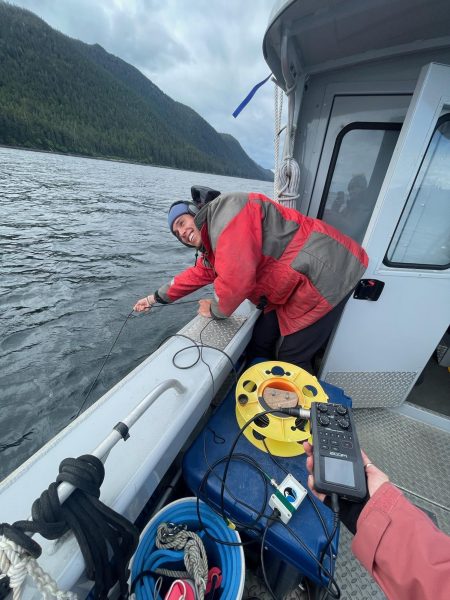
He had monthly check-in meetings with the director. He applied for a summer internship at the Alaska Whale Foundation to learn to conduct the research he would be using for his project.
Lorenzo was trying not to be too hopeful, as everyone told him the internship was extremely competitive.
“And I got it,” exclaimed Lorenzo. “I was really happy.”
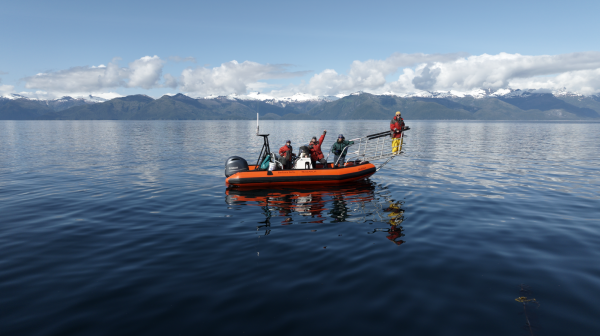
The research conditions in Alaska were not cushy. The Alaska Whale Foundation’s research station was a four-hour boat ride into the middle of the Alaskan forest. Field days were long and arduous, and time on their research vessel was no easier.
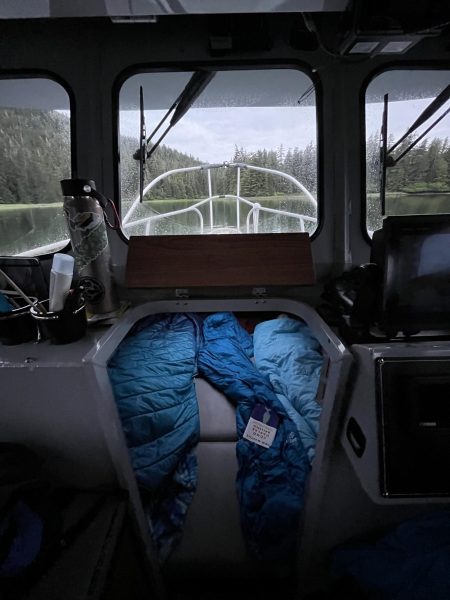
The team would spend four to five days at a time on a fishing boat less than 10 meters in size. It had no restrooms and a tiny cabin where all four team members slept.
“I wanted adventure, now this was adventure,” said Lorenzo. “No breaks, no restroom or shower for five days, you just survive and take data.”
Now that Lorenzo is back from Alaska, he is finishing up both his research project and his final semester of his undergraduate degree. He is also reflecting on how his research experience has changed what he wants to do next.
“I love adventure, but when I was out there doing this crazy thing that anyone would be lucky to go out and do, I didn’t feel happy,” said Lorenzo.
This sentiment is often brought up by young scientists in their academic journey after their first real research experience.
His mentors see Lorenzo’s uncertainty not as a setback, but as one of the greatest benefits of doing research early on in one’s academic career.
Jeff Kuwabara, the coordinator of the Marine Option program at UH Mānoa and one of Lorenzo’s mentors, says that feeling unsure after a first research experience is part of the point.
“That degree you pursue, you kind of tailor it all to that one job,” said Kuwabara. “If you get out of school without having done an internship in that field and you find out you hate that thing you studied, well you have kind of just wasted four years of your life.”
Kuwabara said that students often romanticize a career in science. They imagine what their dream job will look like, often committing to a bachelor’s or even master’s in that subject before they ever get a chance to see what the job is really like.
“Maybe that thing you had your heart set on is exactly what you want to do, and you find that out when you do the project,” said Kuwabara. “But maybe you hate it, and that’s okay too, and that is important to know.”
For Lorenzo, the internship and his research project were both a confirmation of his interests and a challenge to his lifestyle. He discovered that while he loves the science, the isolation of fieldwork and long hours analyzing data might not be what he wants for his career.
However, without this opportunity, Lorenzo would not have had this clarity. Not to mention that his research project may never have happened.
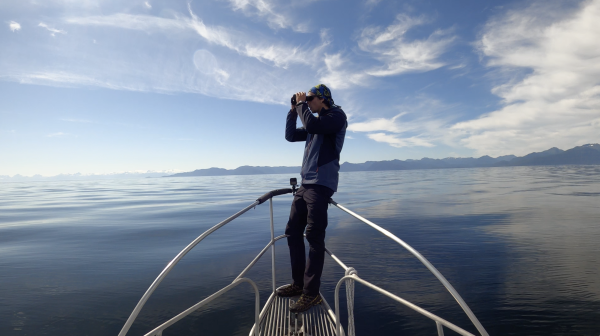
Kuwabara says this is exactly what undergraduate research is meant to do: expose students to possibilities they wouldn’t get in a classroom.
“If you do an internship or a research project you are developing real world skills used in a real job,” said Kuwabara. “And you’re never worse off for doing that.”
The opportunity also gave Lorenzo connections in the field – another benefit that students often underestimate the power of.
“They start to develop a professional network,” Kuwabara said. “They get to know the people in the field and likewise those in the field get to know them.”
For Lorenzo, that network started with his internship mentor who led him to a researcher in Alaska. It now includes scientists from two institutions who have guided him through the launch of his first independent project.
His next step is less clear. He still loves biology and mammal behavior. But now he knows more about what doing science actually looks like day-to-day.
“I love science and I want to keep going on this track, but I need to find a way to balance the science with the rest of my life,” said Lorenzo. “But I’m super grateful I got to have this experience before I go to grad school.”