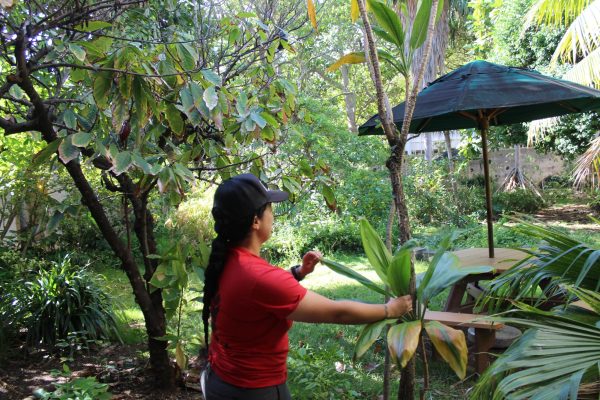

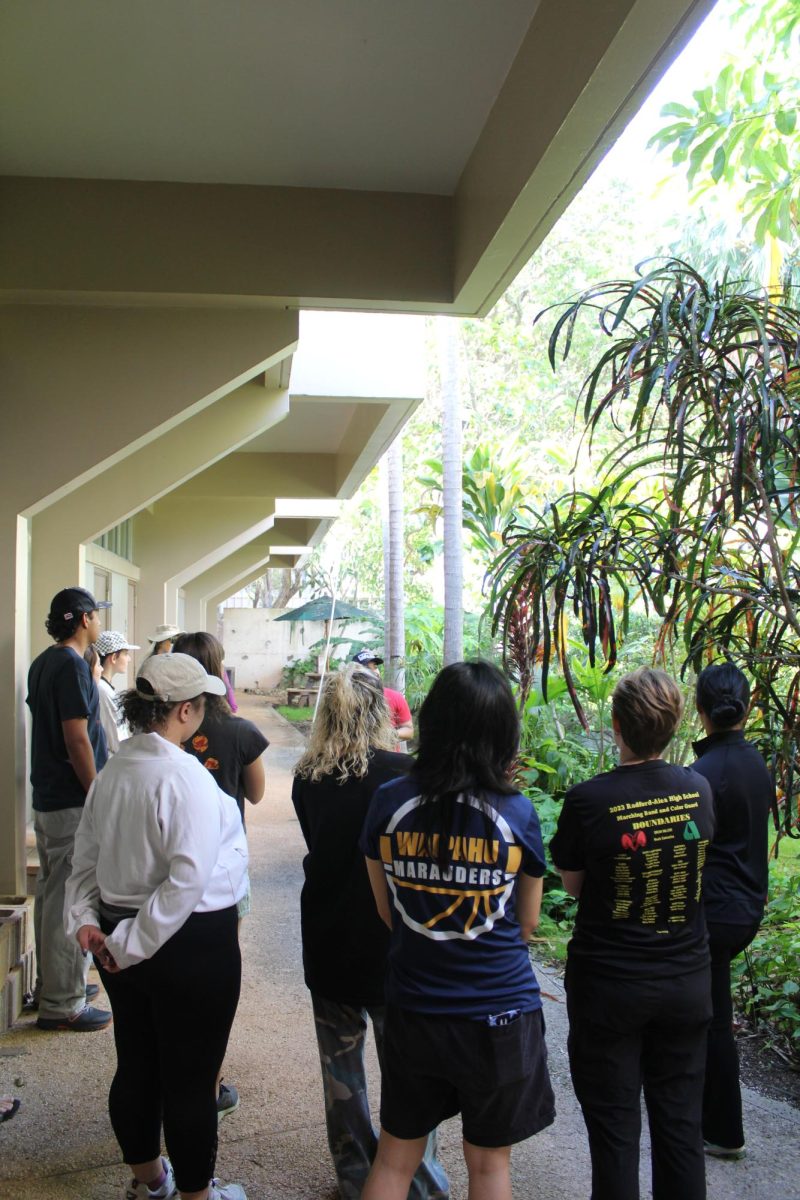
Once a month, the Hawai‘i Botanical Society hosts an event that encourages volunteers to give back to ‘āina. The event not only is volunteerism, but also an educational opportunity to learn about plants endemic, indigenous and introduced to Hawai‘i.
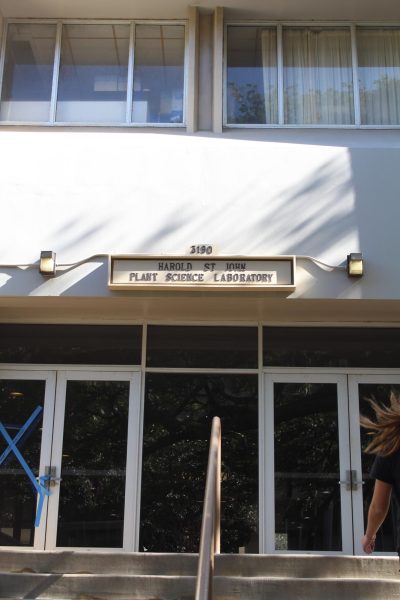
Arby Barone, Native Hawaiian Place of Learning (NHPoL) advancement coordinator, organizes monthly events that focus on gardening in certain areas of the school. These community workdays are beneficial to the UH Mānoa campus.
“I am here today because I believe this type of mālama is impactful and does help,” said Barone. “It is a kuleana I take very seriously and I am very fond of many of the individuals in the garden.
Some of them came here on their own, and mostly all of them are used for teaching.”
Since 2016, UH Mānoa has been officially recognized as an arboretum. With the status achievement, there have been efforts to increase the number of native species on campus.
“As a registered arboretum, the campus has certain objectives that it has to fulfill, one is labeling the plants,” said Barone. “On campus we currently follow a five color labeling system so that at a glance, we can tell the origin of the plant.”
The labels include the species’ full common name and family, scientific name and family, and also origin notes.
“Down in the bottom we have origin, so anything that is specific about our plants,” said Barone. “There is also a succession number at the top in case we need to look up a plant, a specific one, we can do so in our database.”
This is a requirement as a registered arboretum. Barone explained that the number of species increases with status. UH Mānoa is at a relatively low status compared to national and statewide recognized arboretums.
The university has many plants from around the world planted around campus in conservation efforts, according to Barone.
“Even before becoming an arboretum, the UH campus did serve as a site for genetic conservation,” said Barone.
Historically, botanists travelling to and from Hawai‘i introduced many species of plants that can be seen all around campus, and the brown sign signifies that the plant is not endemic.
“On campus, many of our brown signs actually represent species that were or are endangered in their native range, that were brought here to preserve genetic diversity,” said Barone.
Long before plants were introduced for purposes of conservation, many plants were brought over by early travelers of the Pacific via canoe.
“In many different voyages, different plants came to Hawai‘i from areas all over the Pacific,” said Barone. “Things that came over were used for clothing, food or cooking, sail making because you would have to be able to repair your canoe at sea, medicine or they were used for spiritual purposes.”
The plants around campus are heavily maintained. With a staff of 30 full-time employees, the campus plants are closely monitored, and even the invasive plants have justifications.
“As an institution, The University of Hawai‘i has certain standards it maintains in how our trees are trimmed, how our grass is cut and how our sidewalks are cleared,” said Barone. “Those kinds of things are priority items, the health and wellness of our plants are not priority items.”
Plants, specifically trees around campus, serve many purposes that stretch far beyond aesthetics. Many plants are used for research or educational purposes. Trees serve as energy decreasers, nesting sights and even assisting with the water table.
“When we remove a tree, we have a policy in which that tree has to be replaced with a similar one in terms of canopy and size,” said Barone.
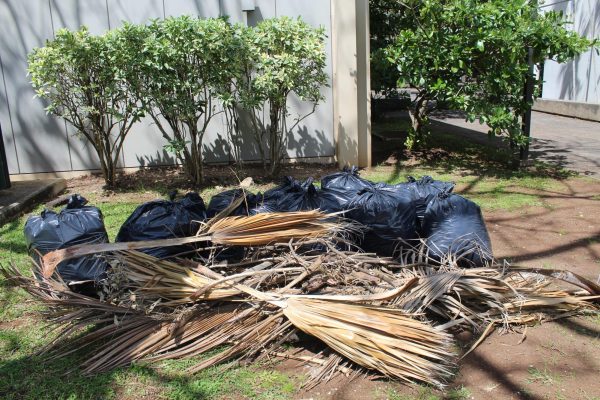
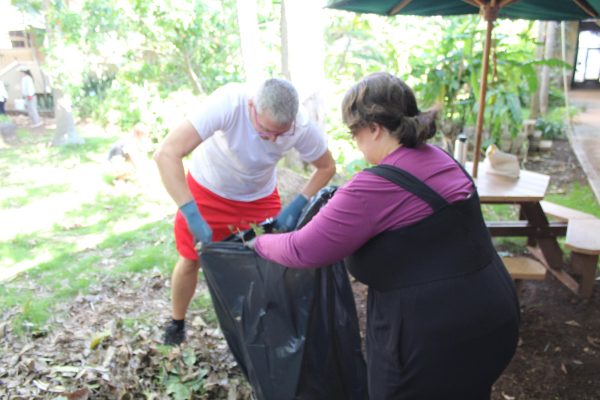
After just a few hours and shared effort, the space was seemingly brought back to life.